
Jaguar Land Rover
How I bridged a gap in the car purchase journey.
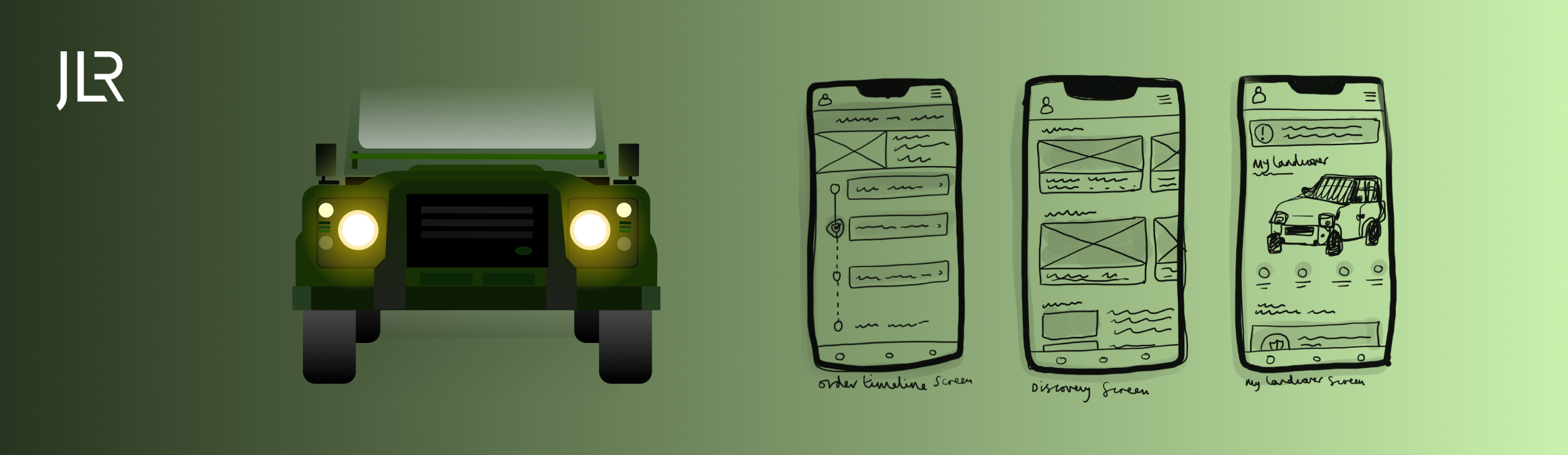
Product Designer
Business analyst
Product manager
Tech Lead
Developers
Team
Skills
UX Design
UI Design
Illustration
Date
Role
Senior Product Designer
2020-2021
Jaguar LandRover (JLR) is a leader in building vehicles of luxury craftsmanship.
They portray heritage, tradition and capability.
JLR has a loyal fanbase from the retail perspective as well as a cult-like brand following.
The Context
Overview
The challenge
My Role
In 2018, car apps were pretty new to the market.
The novelty of being able to turn your engine on or heat your car seats whilst sitting in your living room was a luxury.
Fast forward to 2020, people were long used to this. They wanted a more holistic experience from the comfort of their living room. To feel part of a club, to be connected and informed, to be a part of the JLR brand.
It came to light through research and analytics that post-sale upgrades & retained custom was dwindling through the lifecycle of a car purchase. As a brand with usually high retention and loyalty, this was a concern.
We looked at data spanning various touchpoints and interactions within the retail journey; Exploration, Purchase, Post-purchase. Myself along with a UX researcher analysed post-purchase surveys, as well as numbers of negatively received calls to dealerships.
Customer initiated interactions to dealerships had increased during the post-purchase stage of the car buying journey. This indicated a consistent break in the journey, resulting in unsatisfied customers and ultimately a drop in post purchase sales and upgrades.
I led the design of a medium sized Delivery tracker experience within the MyJLR app between January 2020 and November 2021 and collaborated with two other designers on the other app features.
In addition, I worked alongside a Researcher, a Product Manager, a Tech Lead and a team of engineers.
The Process
Discovery
Problem statement
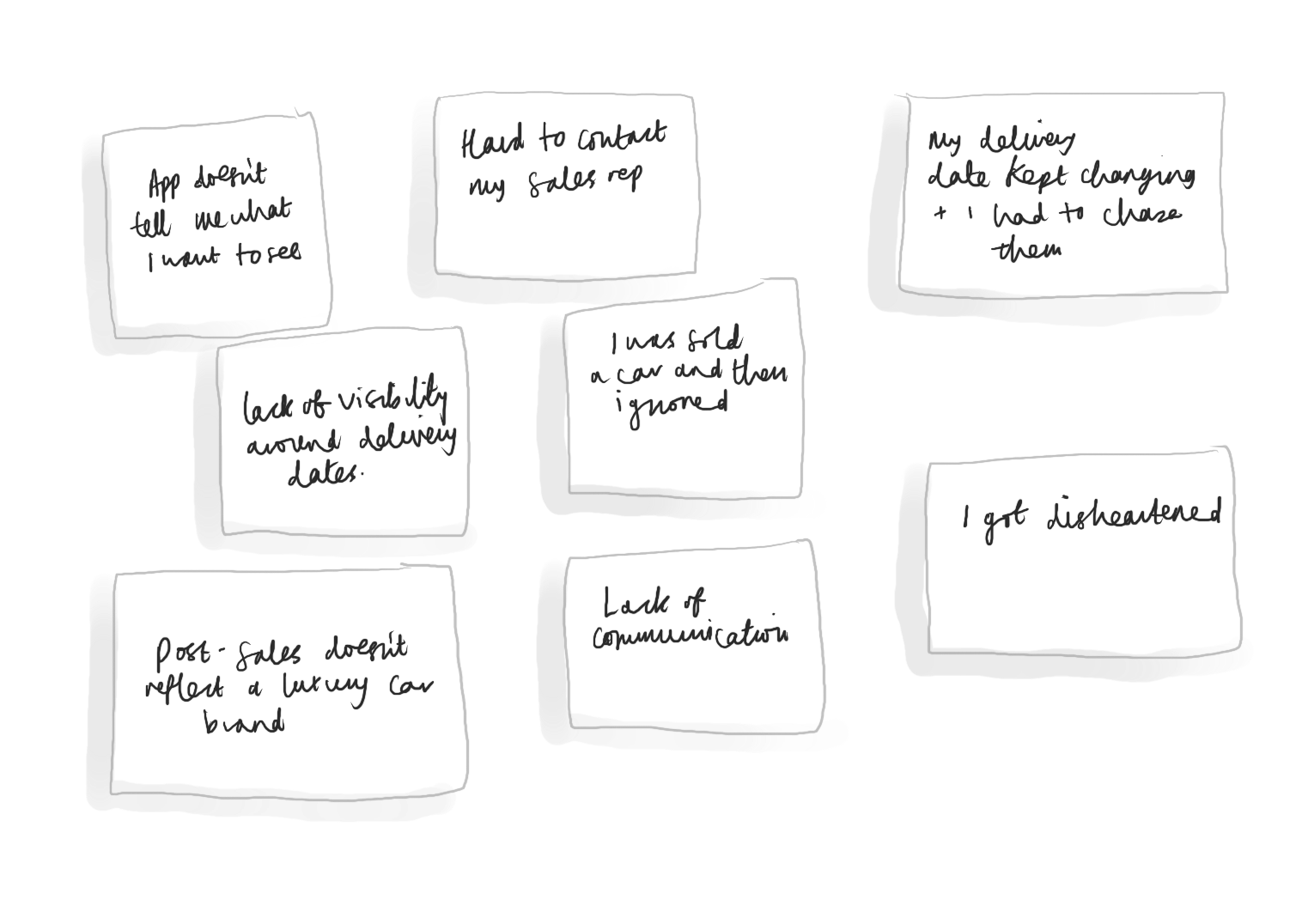
We wanted to understand this drop in engagement and upgrades post-sale phase. Surveys and user interviews showed that after having had great service and attention during the pre-car sale phase, customers were feeling abandoned and out of the loop during the waiting period of their new car to arrive.
There is a large grey area between vehicle purchase and delivery, with lack of delivery information, updates or broker communication.
As part of a wider app, this is the area we needed to improve and focus on.
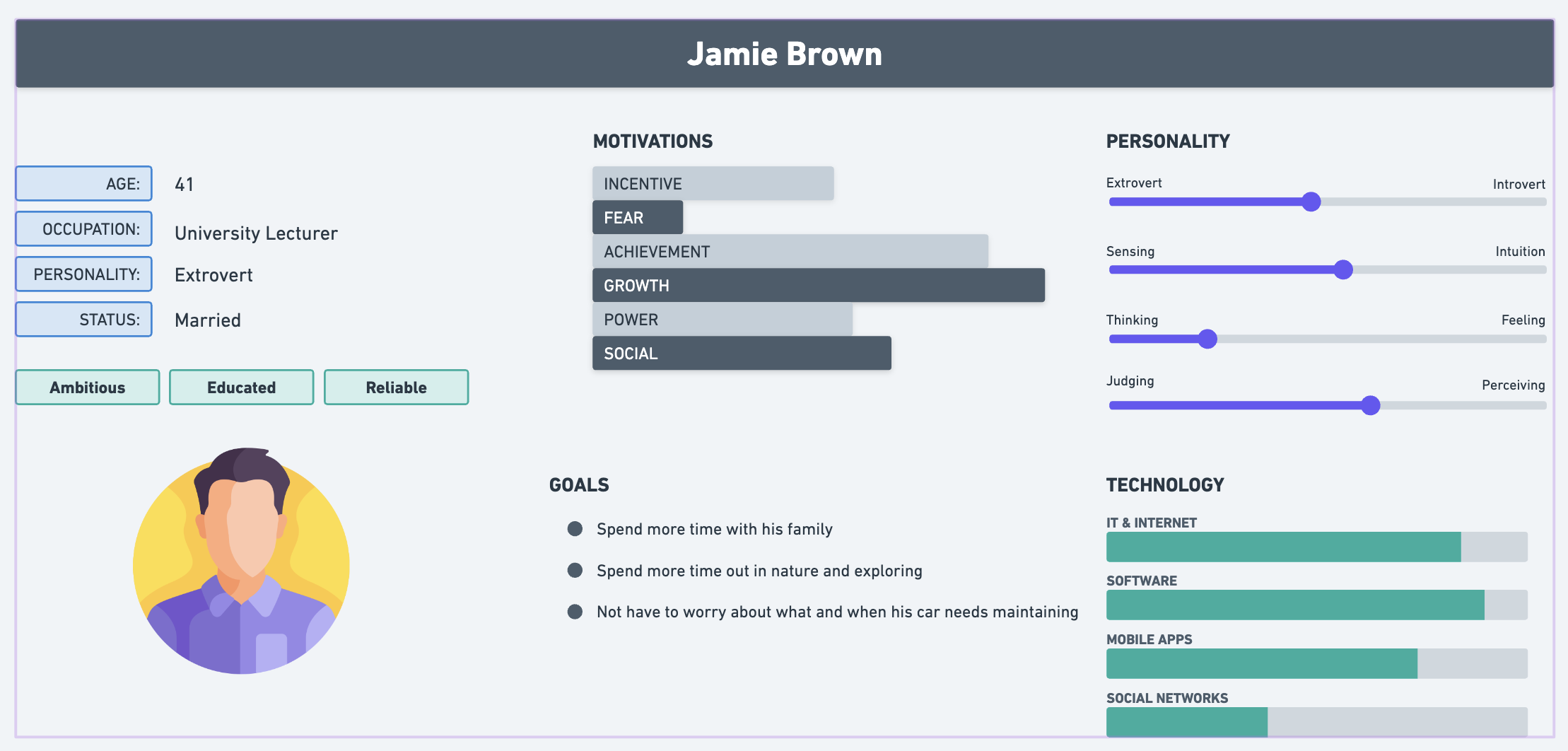
I ran a collaborative persona workshop with stakeholders in order to gain a deep understanding of our target users and their needs. This was important as it ensured that we build a comprehensive view, as well as aligning stakeholders across the business.
Personas
As a heritage brand with an extensive history, it was a priority to improve our customers perceptions of JLR and ultimately increase revenue by bridging and closing the gap in the customer purchase lifecycle.
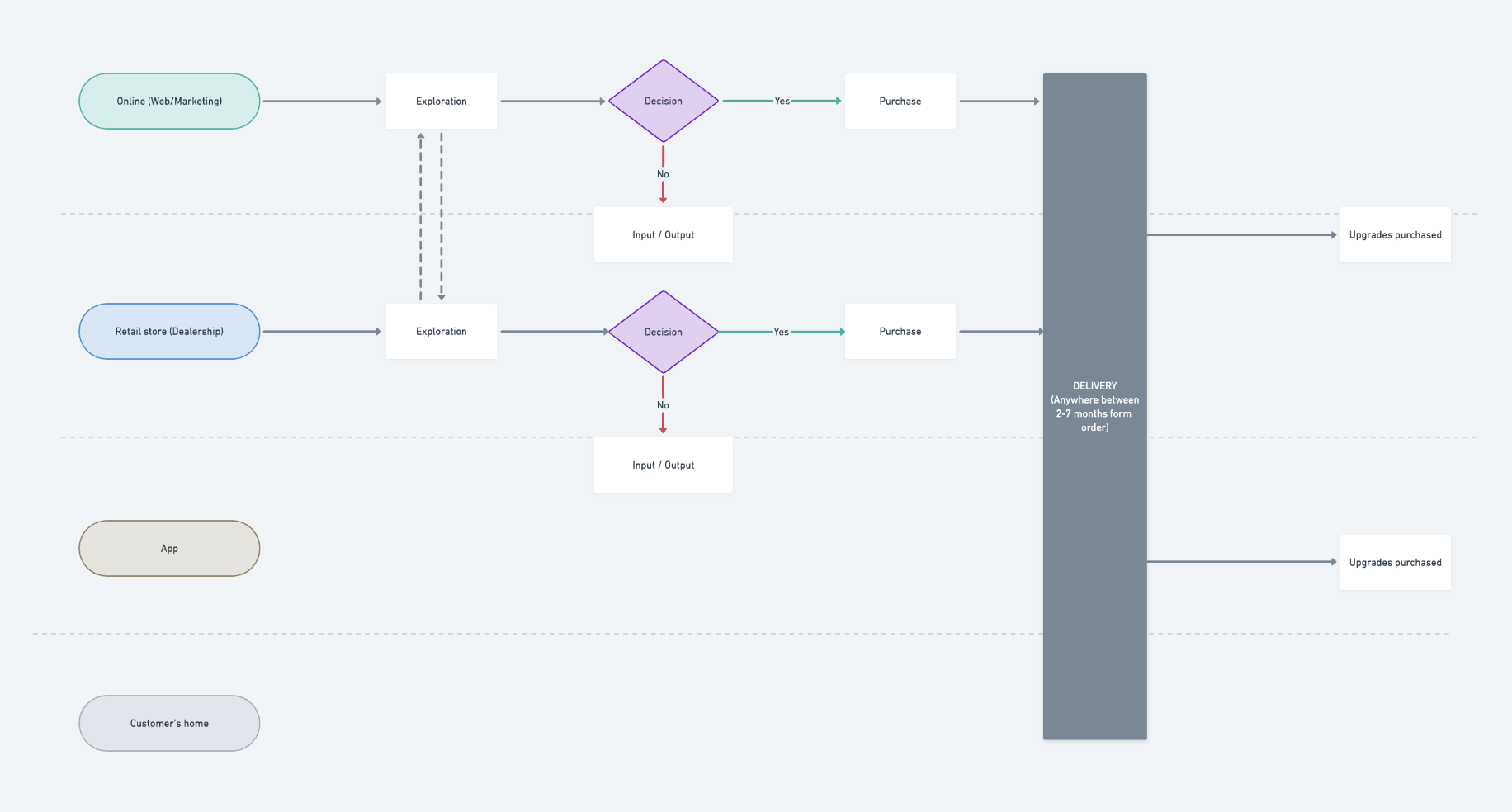
Review of current sales & post-sales journey
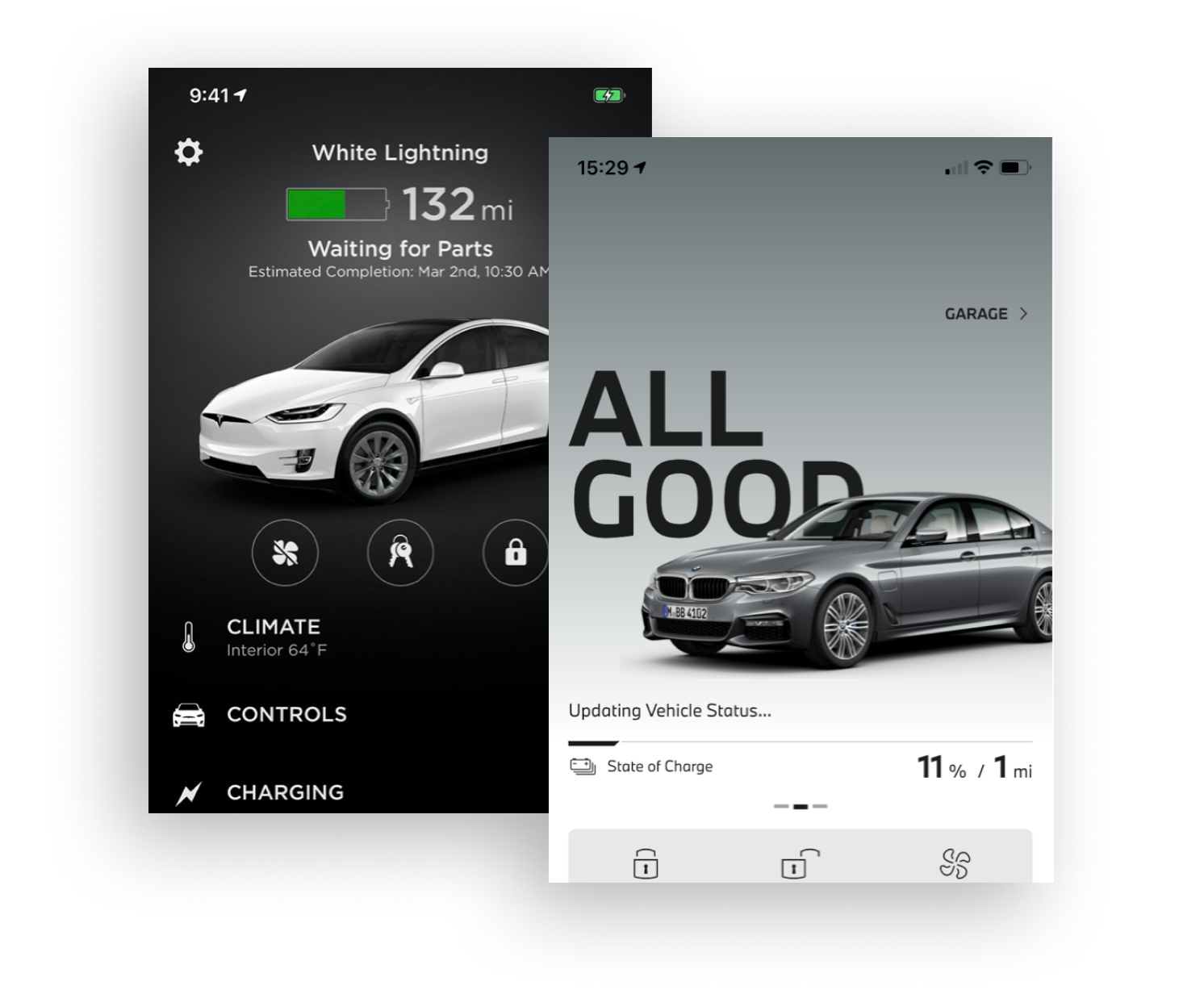
We already had some insights as to what our competitors were doing in the digital automotive space, however we wanted to dive a little deeper into the UX of the apps - what were the commonalities, what was missing, what could we do better?
Competitor Analysis
Commonalities between other electric car apps:
Emphasis on car controls (locking/updating/upgrading)
Lack of easy contact to a human
Clean, clear UI and navigation
Upgrade/update progress clear with dates shown
Lack of personalised vehicle resources and onboarding
To prepare for the workshop, alongside a UX researcher we gained data and insights on our customers from the analytics platform, app data, sales surveys and market research.
Our primary user
Between 29 - 55 years old, tech savvy, stable income, with a young family. They live an active and busy lifestyle, with easy, minimal vehicle maintenance and upkeep a necessity to maximise family/social time.
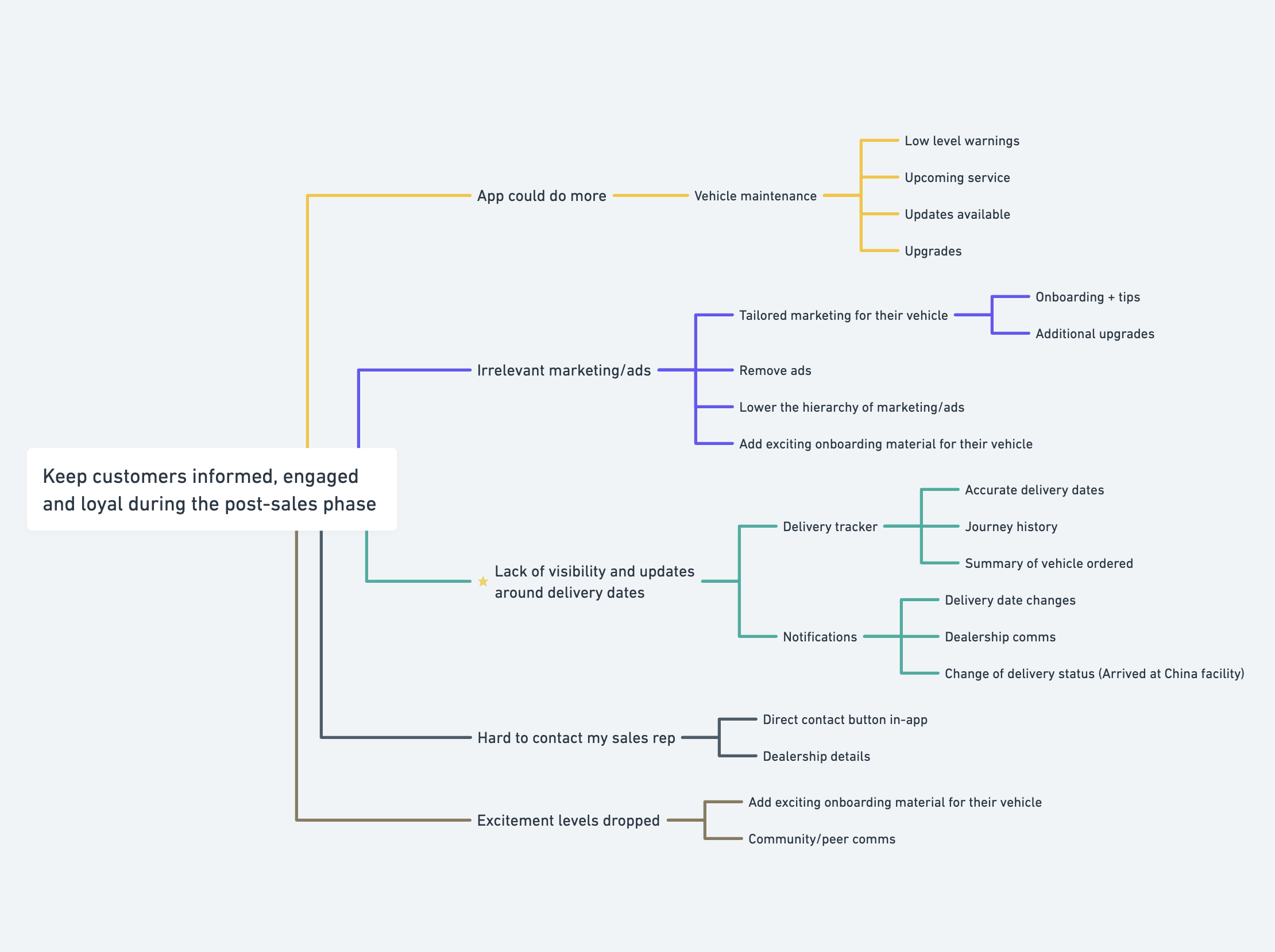
How do we keep our customers informed, engaged and loyal whilst waiting for the delivery of their new vehicle?
Is there a way that we can enhance the current MyJLR app to address these issues?
The app isn’t very informative
Too much irrelevant marketing/ads
Could do more
Makes me feel special and part of a club
We consulted an external advisory board made up of customers who are keen to contribute to the development of JLR’s digital products to get feedback on the wider MyJLR app.
Analysis of the MyJLR app
Requirements
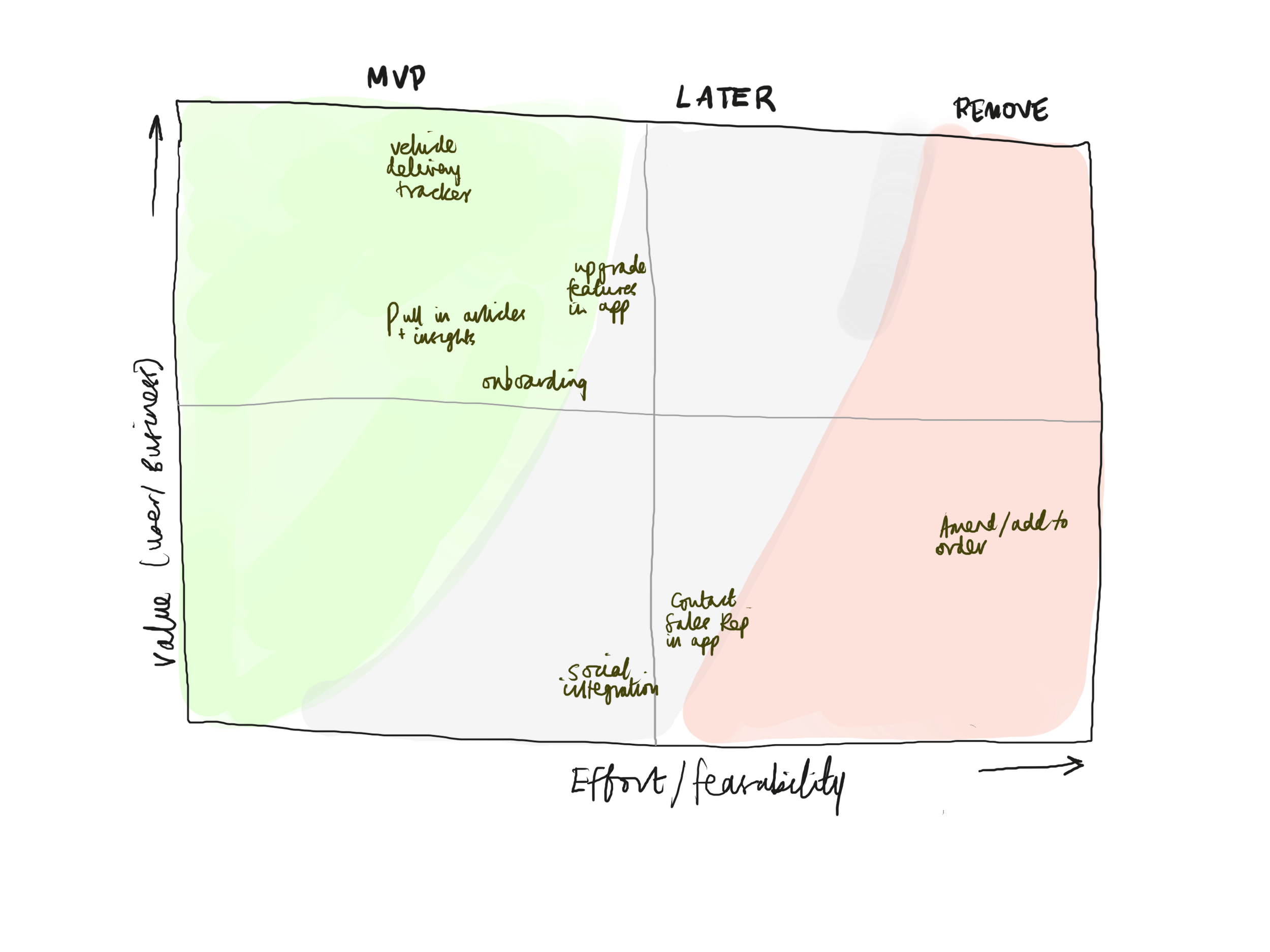
We came together as a team (Quad + engineers) in order to understand viability and feasibility.
The green area held high value enhancements whilst not being too intensive on development, so this influenced our decision making and became our focus for MVP.
Feature Prioritisation
I led a card sorting workshop with a small number of our externbal advisory board to understand which ‘solutions’ or features would be most beneficial.
At this point in order to reduce overwhelm, we only included the higher level solutions.
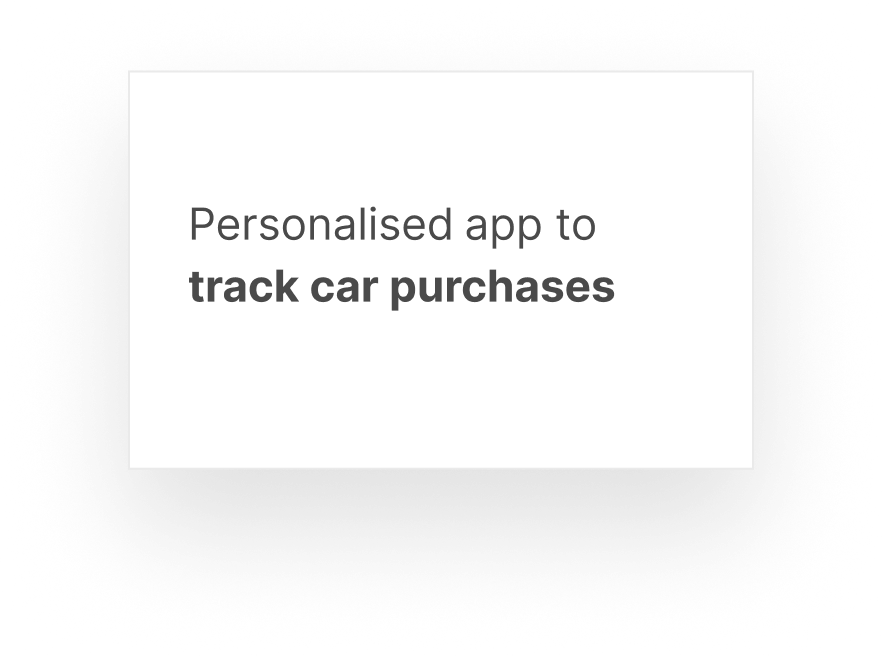
The top three features that were deemed most valuable:
Vehicle delivery tracker
Vehicle onboarding
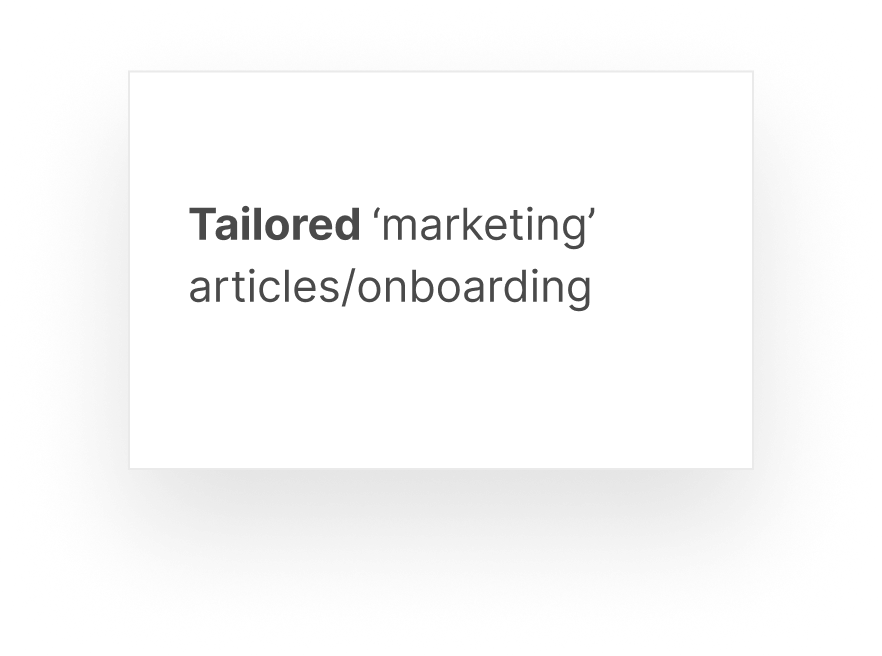
Tailored articles
Card sorting
Opportunity Solution Tree exploration

MVP Requirements
Ideation
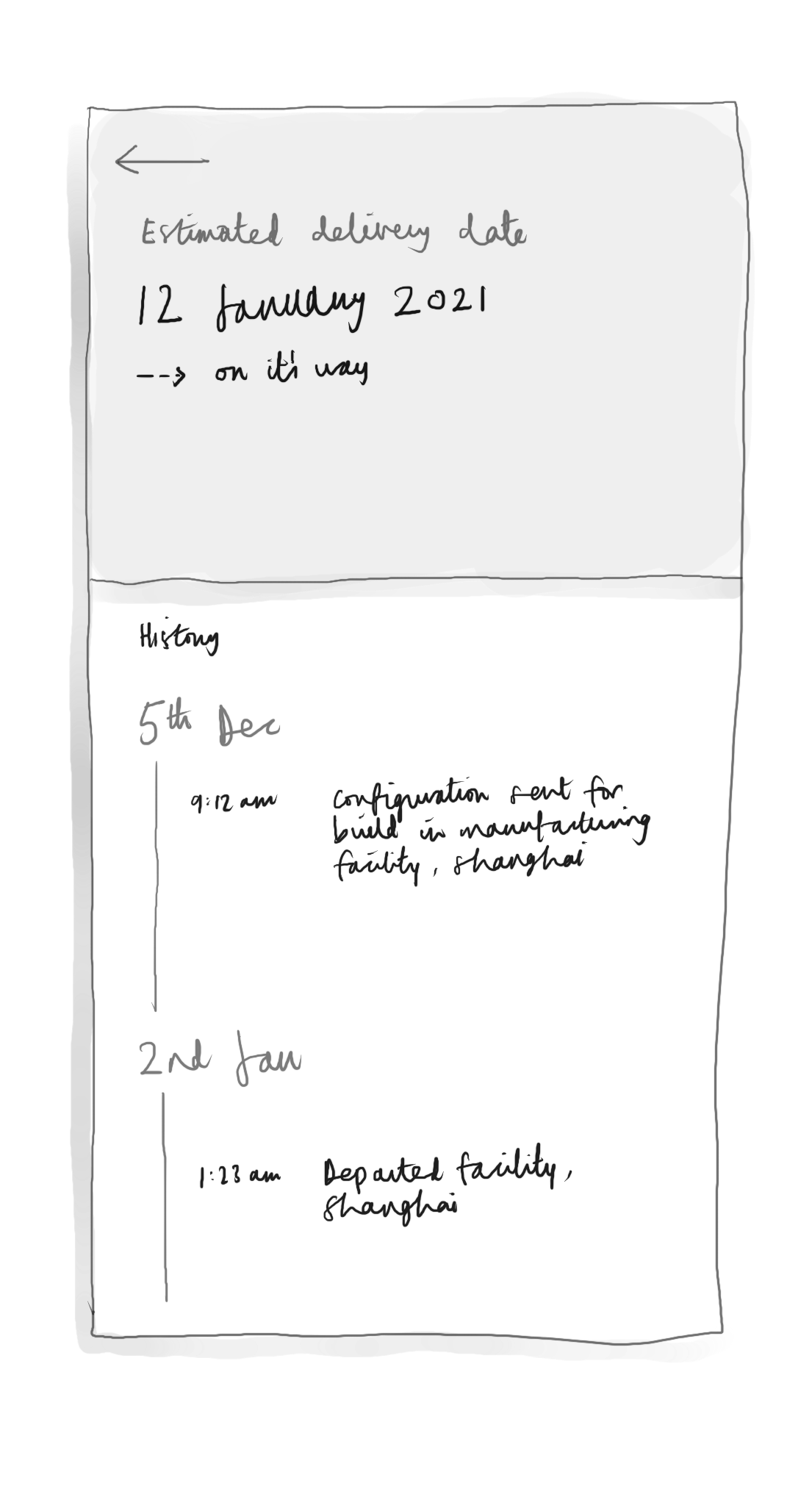
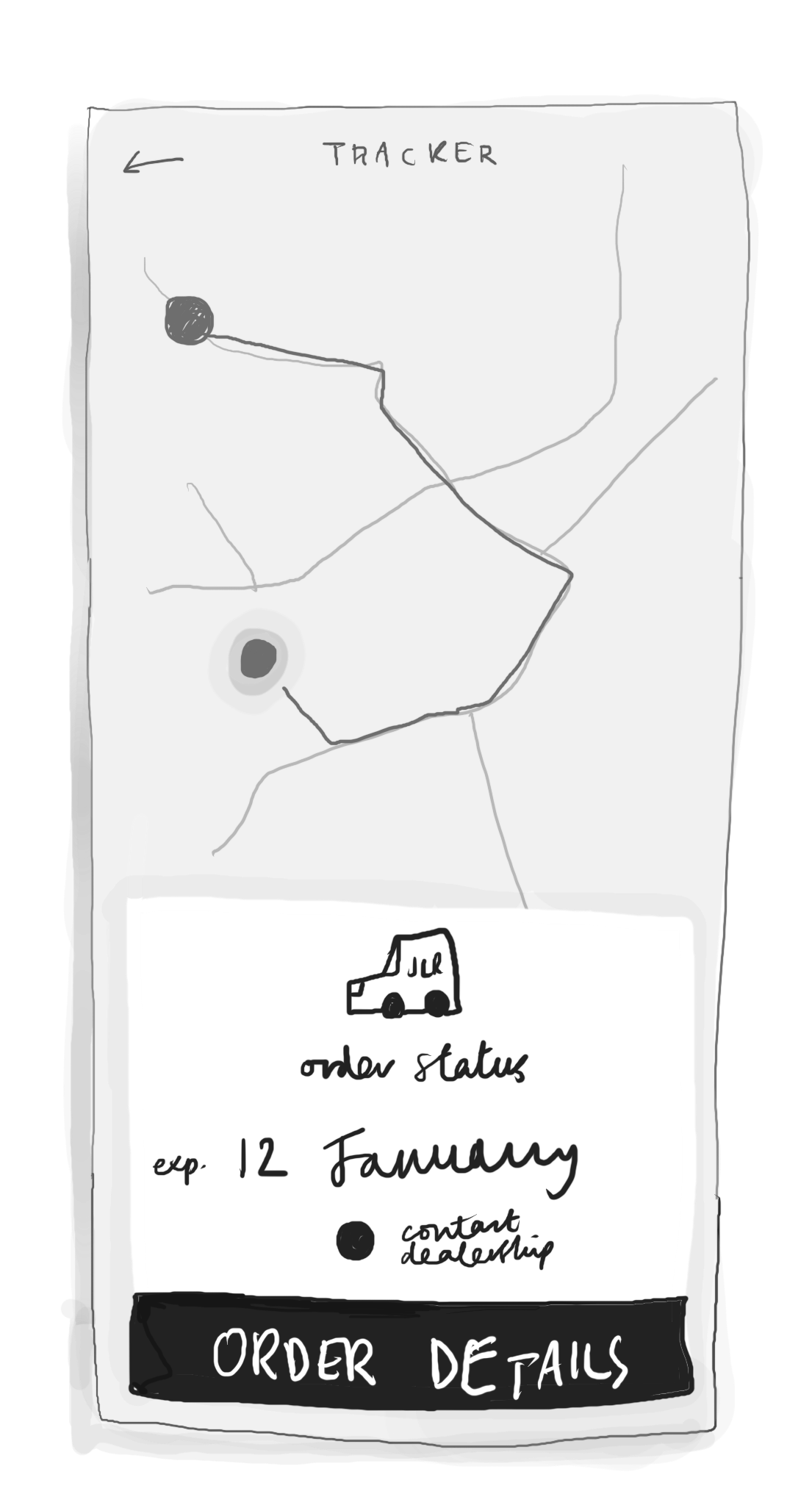
I held an initial crazy 8’s session with my cross functional team to generate ideas and then turned them into rough wireframes.
These focused on the delivery and order status screens, exploring maps and information architecture.
We decided to remove the map view as the delivery journey is extensive (worldwide), which would cause the view to be mostly zoomed out and irrelevant for consuming information.
The Process
User Testing
With mid-fidelity designs I conducted some usability testing using prototypes and navigational scripting.
With a directive around viewing and tracking their order, as well as navigating material, the feedback was well received, with some valid suggested iterations.

Easy, clear view on status of car delivery and order.
Content categories are useful (onboarding/articles).
Sophisticated UI appeals to broad audience.
The Outcome
Designs
1
Order Tracker
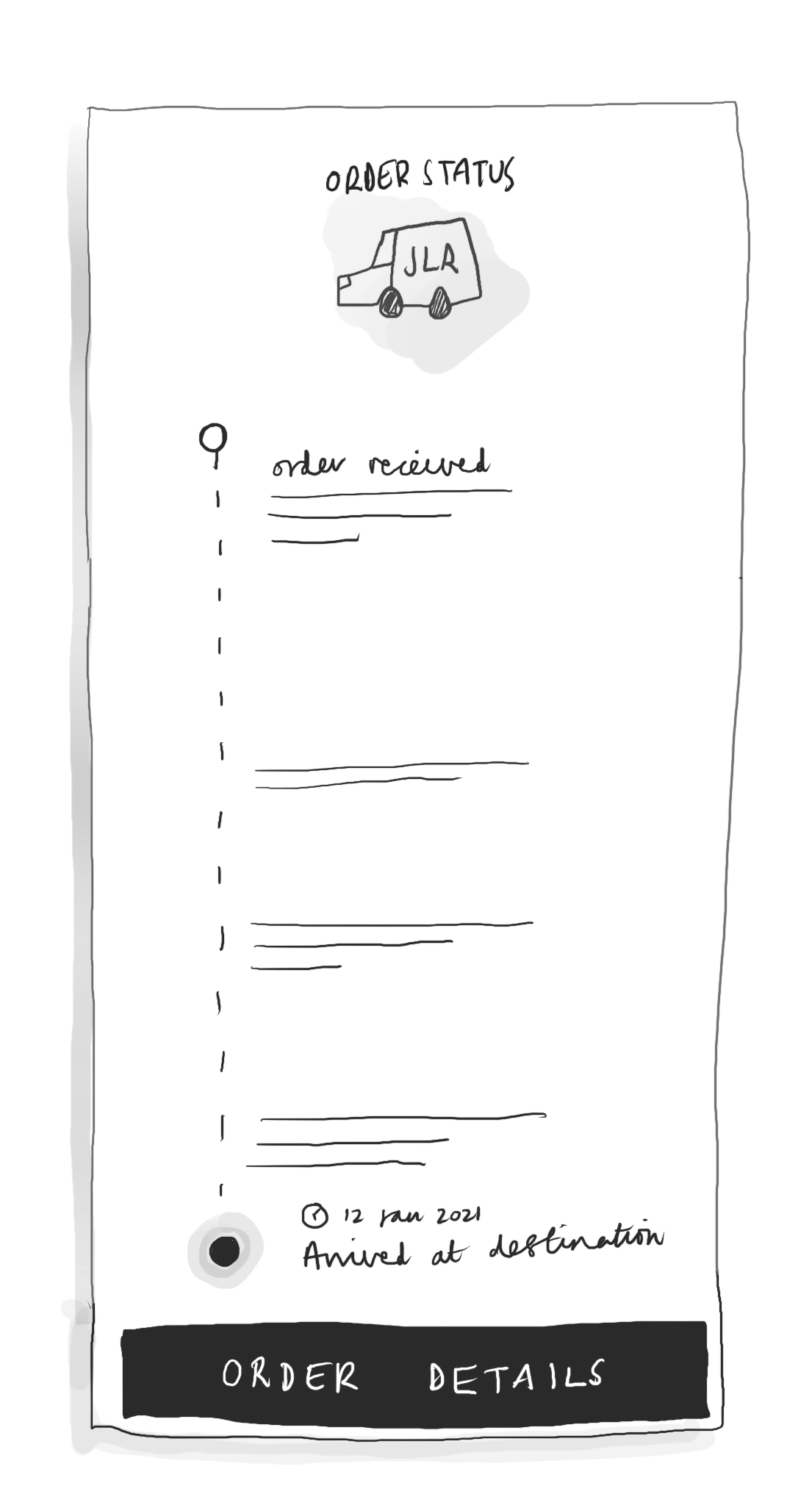
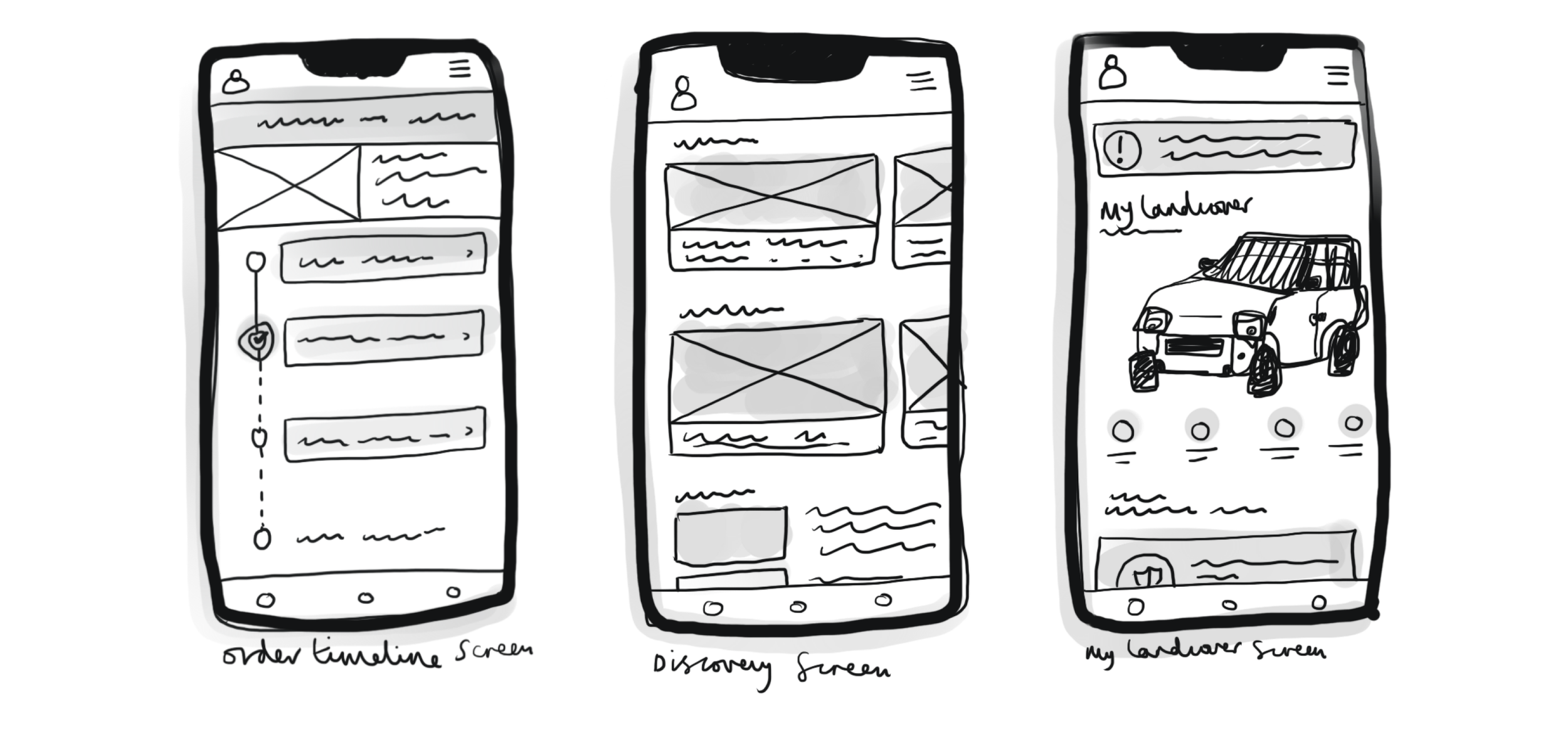
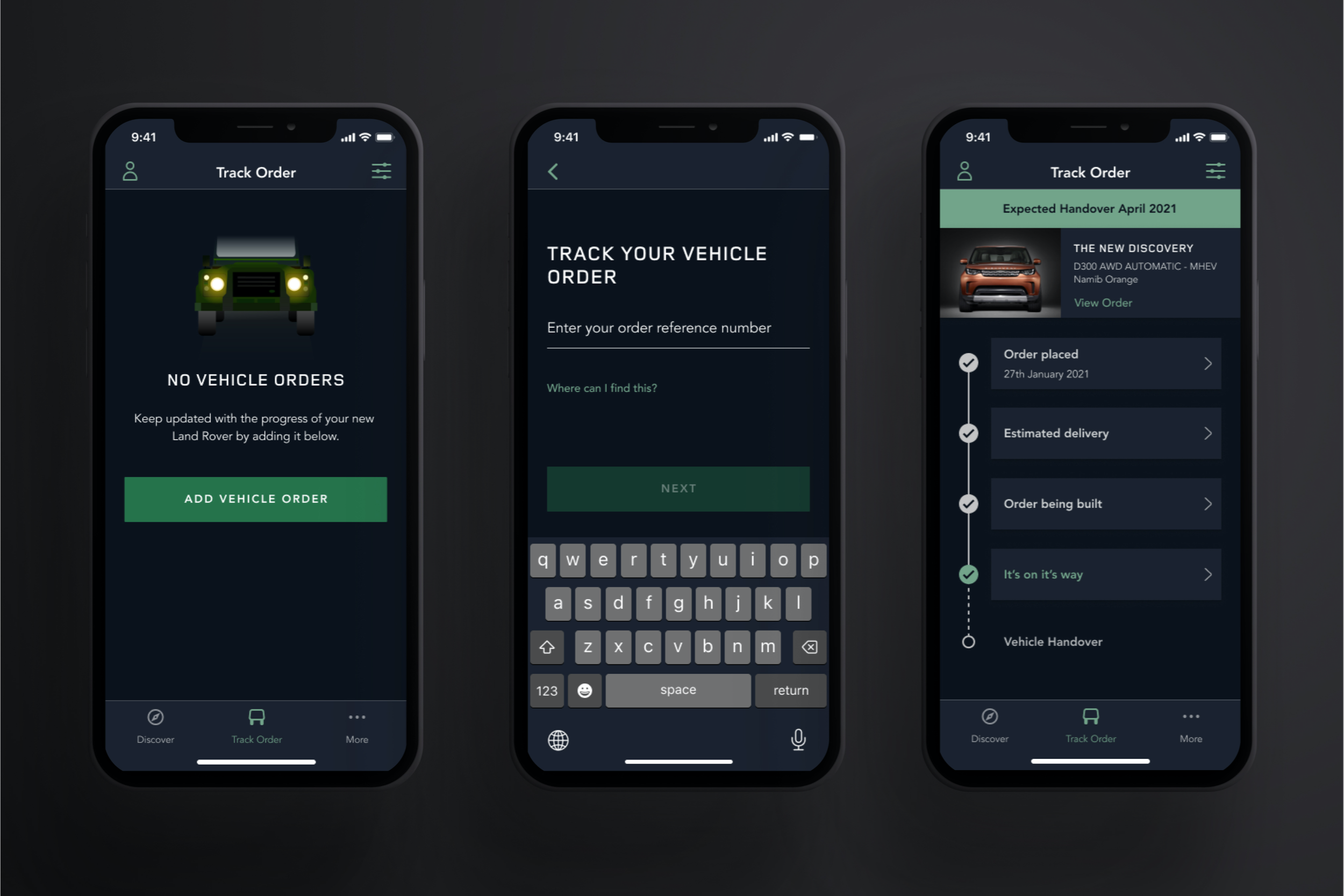
A delivery tracker/timeline which updates as the order progresses in order to bridge the gap between sale and delivery. Data pulled in from the external tracking process meant integration was fairly simple.
Customers were kept informed, and the need to follow up with the dealership was greatly reduced.
Realtime handover delivery date
Notifications for any updates
Detailed vehicle order spec
2
Tailored Articles & Onboarding
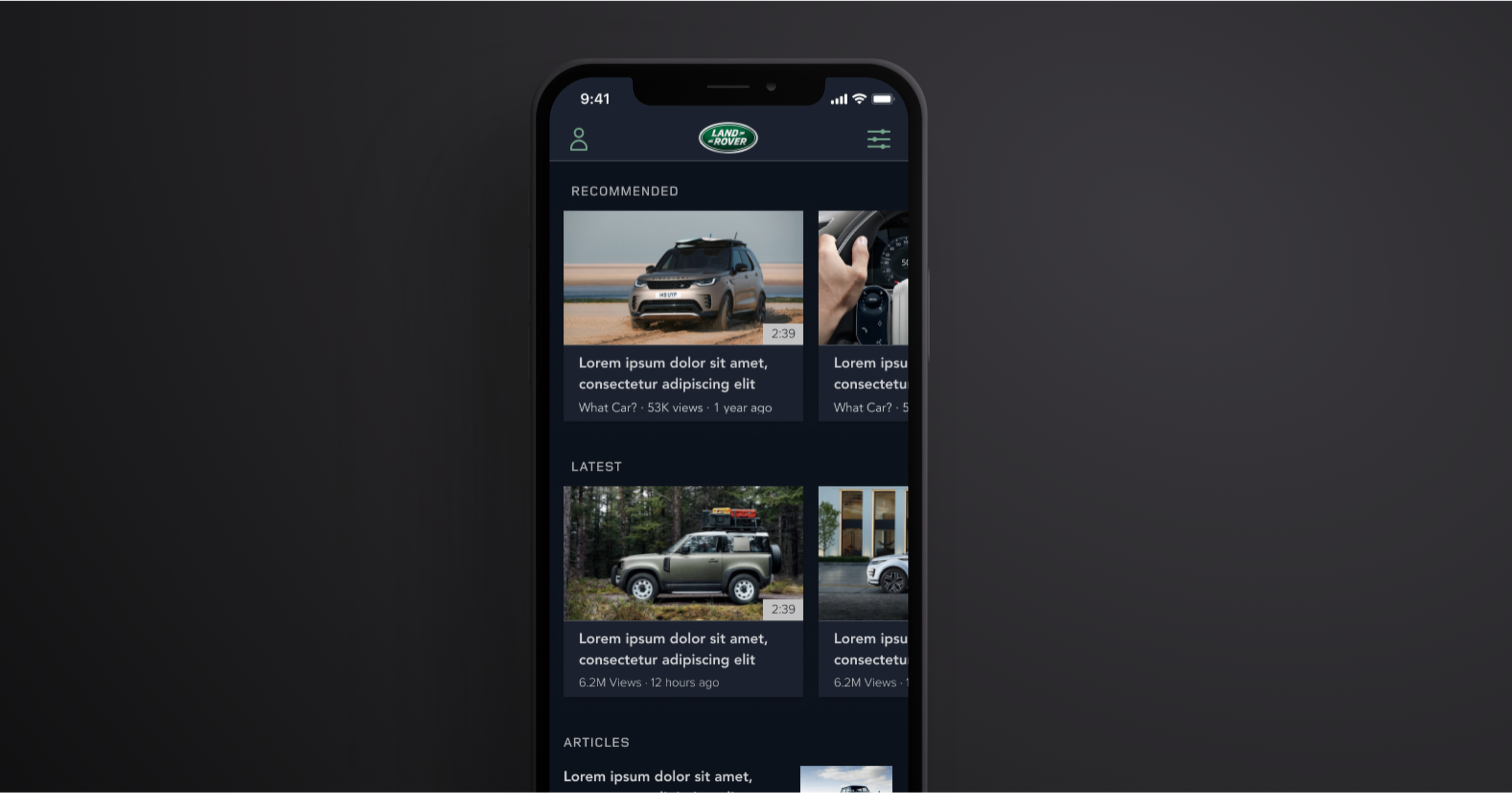
Vehicle specific articles and tutorials increased customers excitement whilst awaiting their vehicle, with improved brand loyalty, peer to peer recommendations. This lead to an increase in post-purchase upgrades, which will be available to add on through the app in a future release.
Onboarding hints and tips
Recommended products/experiences
3
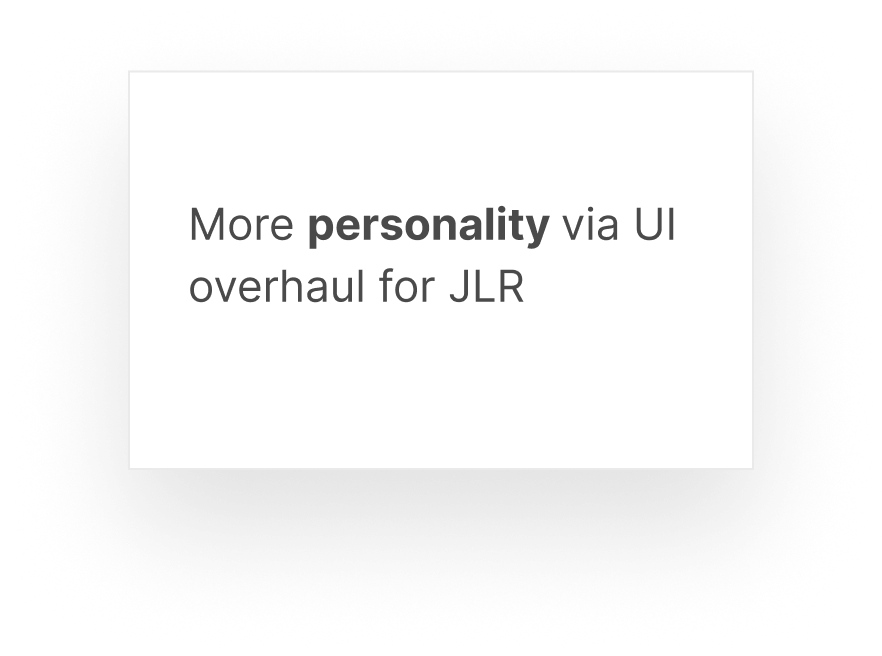
Brand Personality
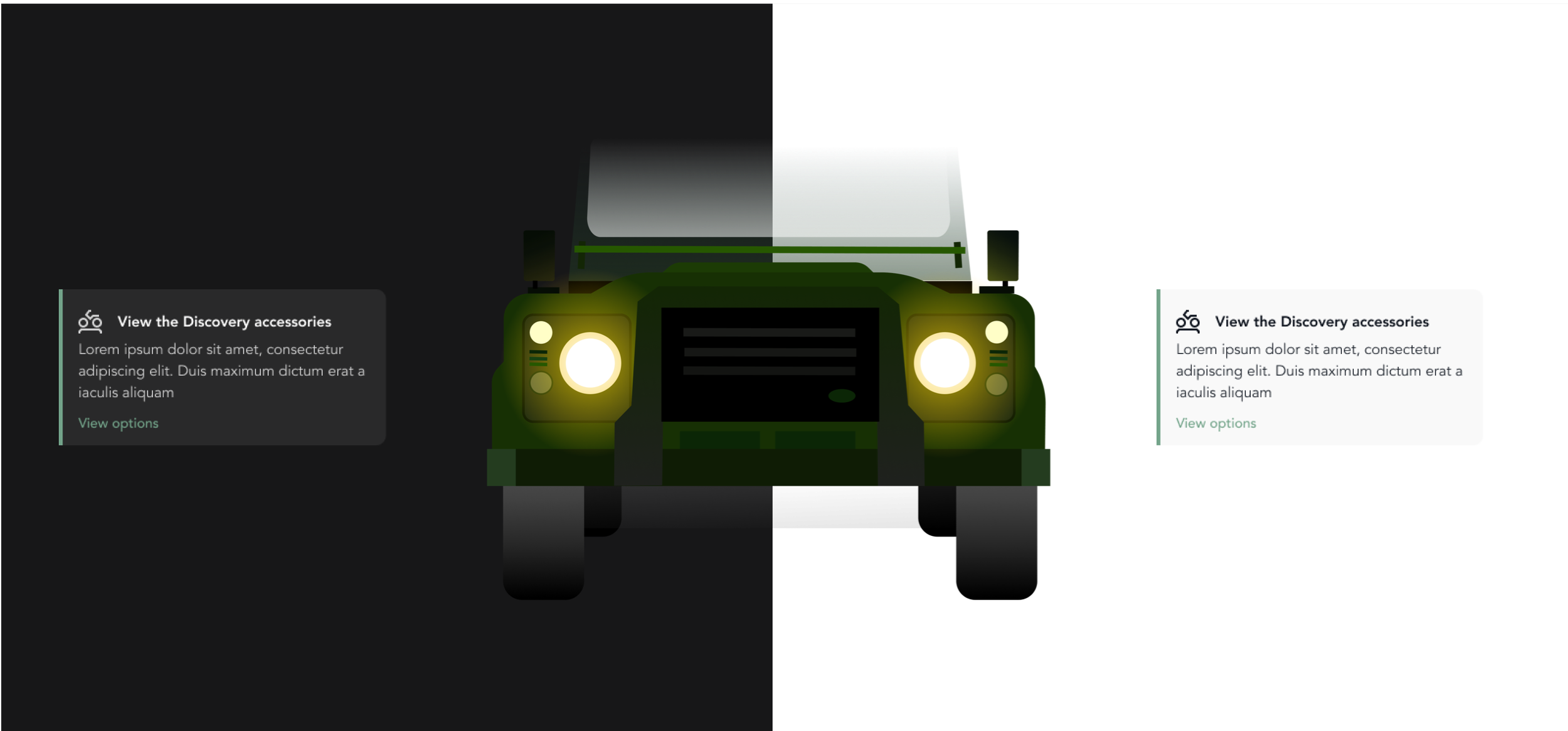
I designed custom illustrations and iconography as well as widely familiar components such as cards and other intuitive UI elements. These would form the growing design system.
As a heritage brand with a new fleet of electric vehicles, there was a need to appeal to a younger demographic.
Emotion and connection evoked
Brand recognition re-established
4
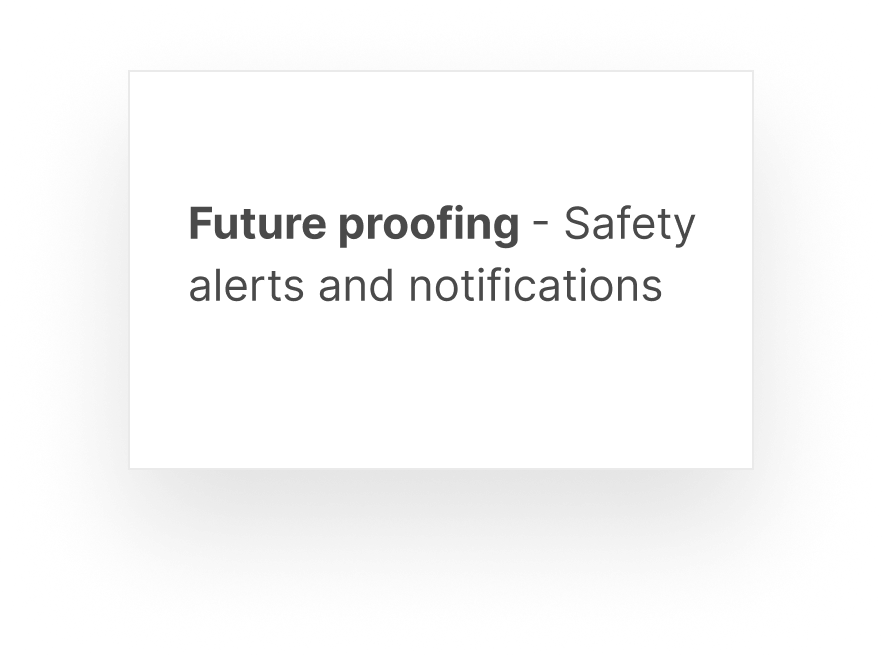
Future Proofing
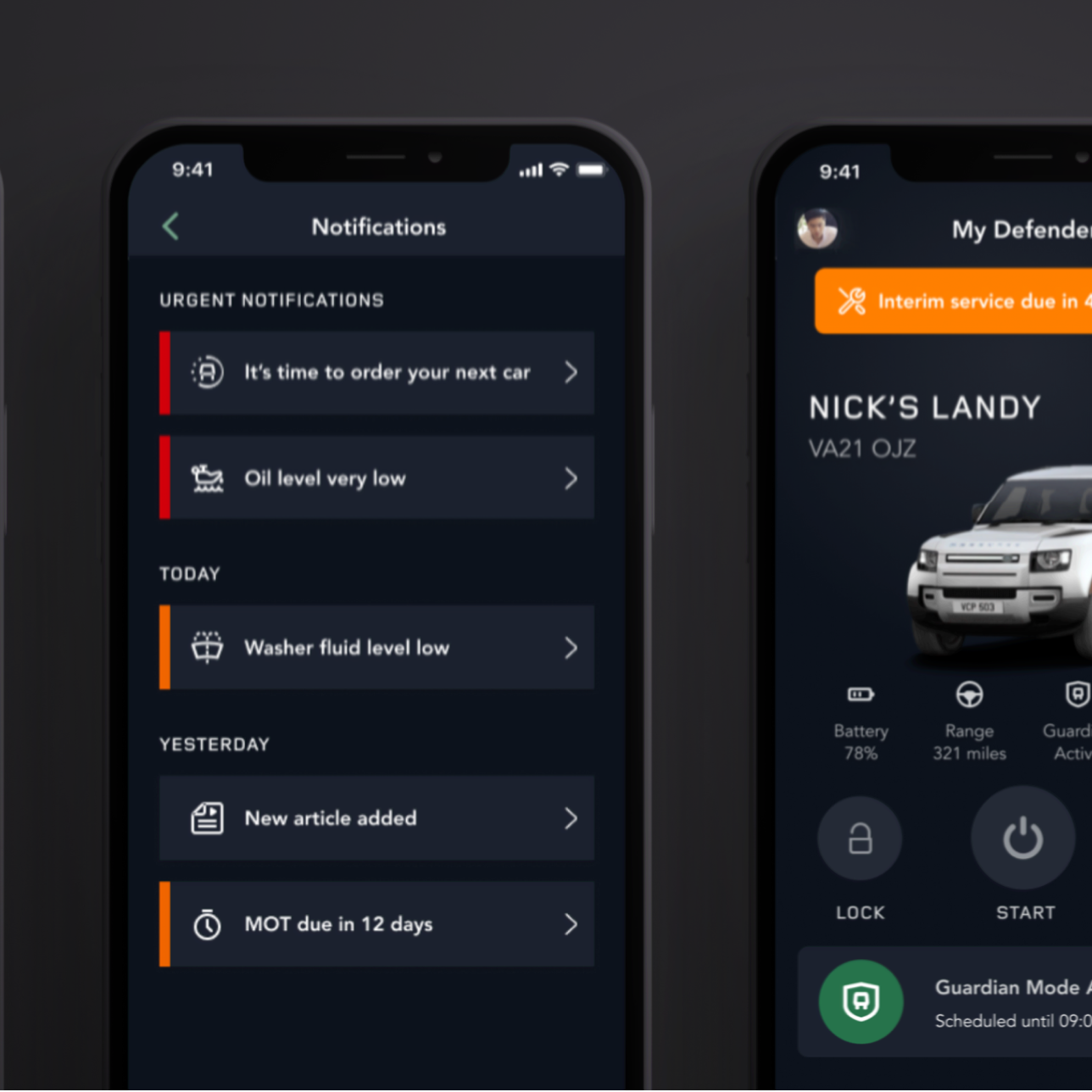
The order tracking functionality is just one part of the larger app’s roadmap. The aim is for it to become a hub to keep the user informed of updates to their car, servicing alerts, and new available features, all without having to take the car to a garage or dealership.
All updates will be made through the app and directly installed on the car, from the comfort of their living room.
Search within articles would be helpful.
Articles not as important as onboarding materials.
Direct contact button instead of hidden within dealership page.
The start of this roadmap sees ‘Guardian Mode’. It gives the user the ability to lock/unlock their vehicle remotely, as well as being able to detect and alert if any force is used to gain entry to the vehicle.
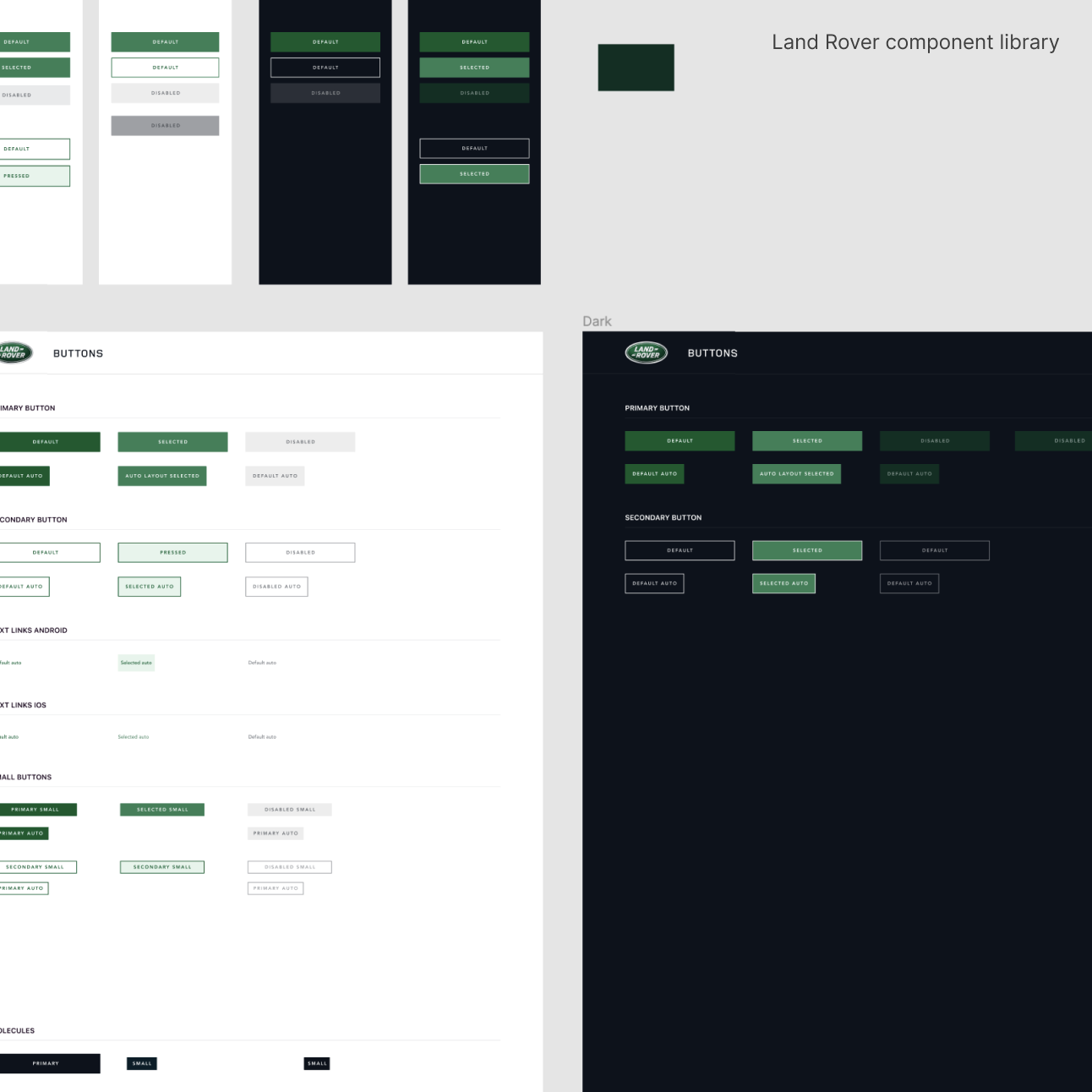
To aid this scalability I contributed to the build and maintenance of the JLR design system to ensure a level of consistency and ease.

The Results
Key highlights
43% increase in customers upgrading or adding features to their vehicles post-purchase.
Opened the brand to a wider technologically minded demographic
A decrease in contact between sales person and customer during the post-sales stage, indicating visibility and satisfaction.
Sometimes the emotional needs of customers gets overlooked, or de-prioritised, but with some simple, key additions to the post-sales process, we helped increase user satisfaction and revenue.
Starting with empathy and the symbiosis of humans with design usually leads to a much wider impact.
Learnings
At times it was tough managing stakeholder expectations as the roadmap for this product was extensive.
Open communication, regular touch points, and highlighting the alignment between outcome and business objectives helped to reduce common subjectivity. We also regularly ran workshops such as feature prioritisation and Opportunity Solution Tree alignment in order to feature version the app.
Stakeholder Management
An eye opening takeaway for me was realising that it doesn’t particularly matter how extensive your knowledge of an industry is. Yes it certainly helps, but the foundations of design, human psychology and communication really bridge the remaining gaps.
Transferability