
Transport for Wales - WSP
Creating a brand new product as the sole designer.
Role
Senior Product Designer
Date
2018-2020
Product Designer
Business analyst
Product manager
Tech Lead
Developers
Team
Skills
Research
UX Design
UI Design
Prototyping
Pitching
The Context
Overview
Transport for Wales are a massive department in the UK that are responsible for all things relating to transport, whether that be public transport, or highways and cycle lanes, the range is extensive.
TfW have access to a comprehensive data sets as they are supported by the government, so they receive data such as demographics living in each city and suburb, modes of transport most used within suburbs and traffic reporting.
This data wasn’t really being utilised, and the biggest problem they had was that they were building cycle lanes and creating smart highways based on assumptions.
However, the success and the requirement of these weren’t easily validated.
The requirements for TfW were to use the data in a way that can be used to validate or better inform decisions for building new infrastructure based on the residents/demographics behaviours and patterns.
The tool is an internal desktop application to be used by Transport for Wales.
The Process
Discovery
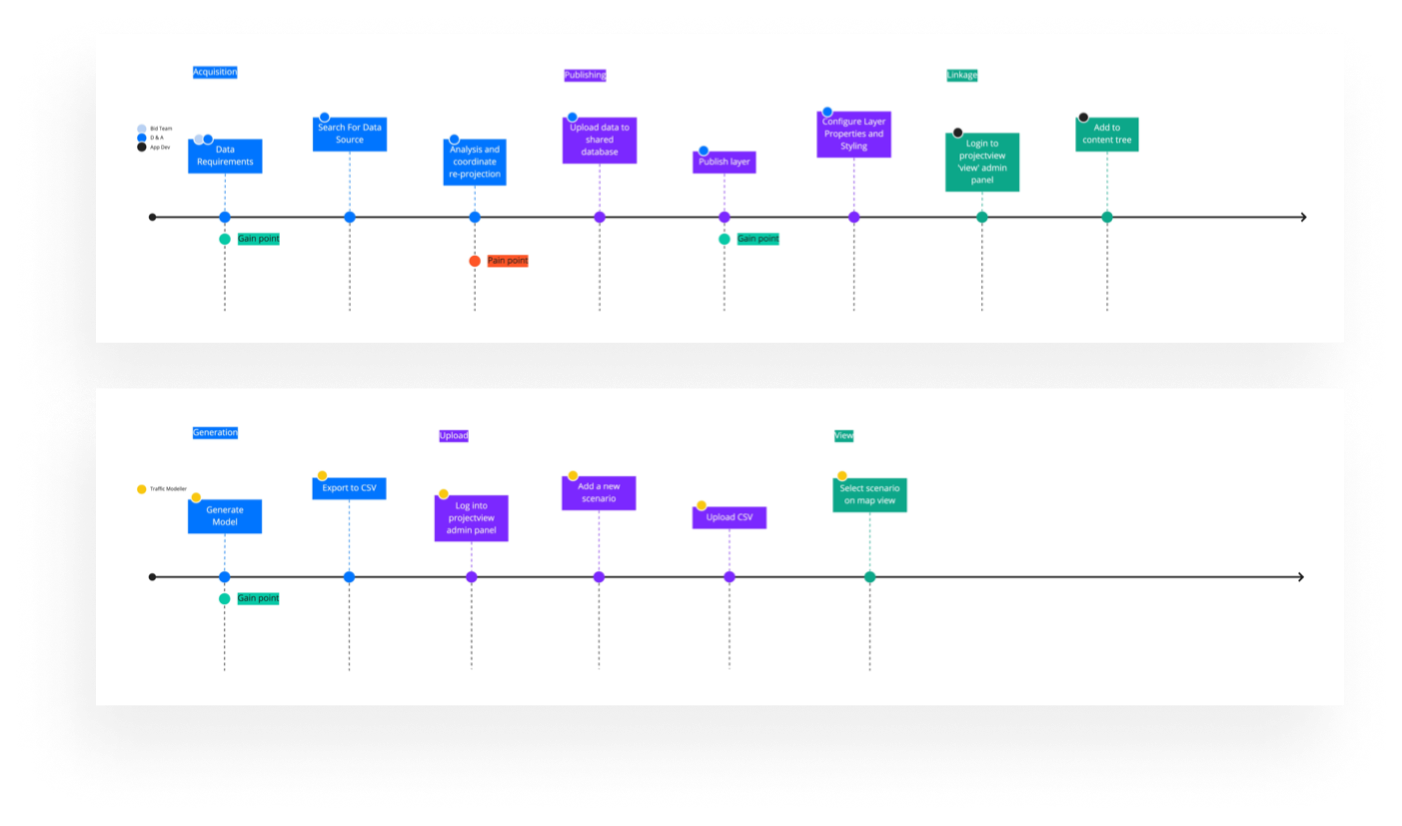
We ran workshops with a large number of employees with varying roles. As a result, we were able to identify 4 main user types for the tool.
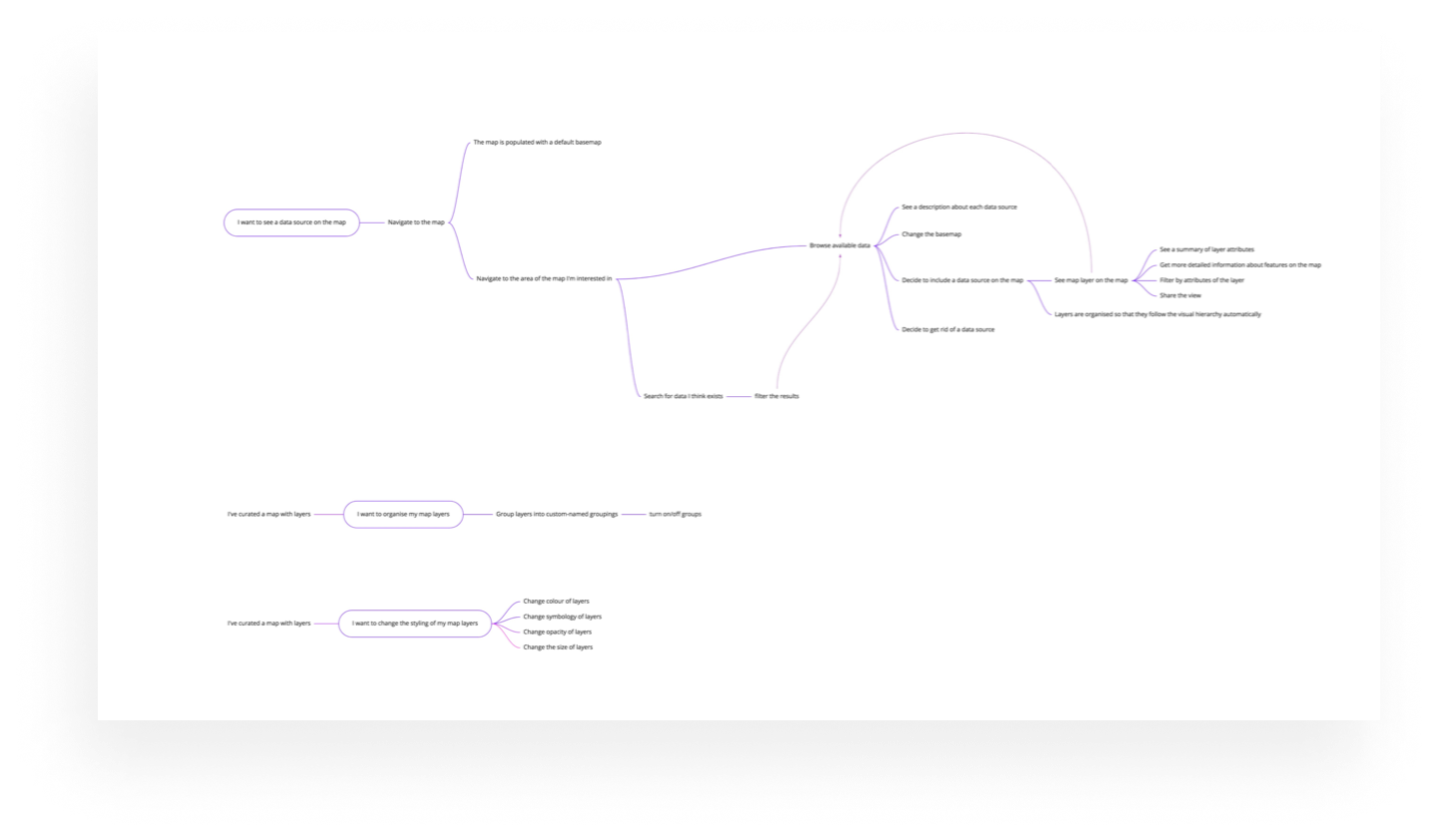
Each user type had a very different key requirement, but some overlapped, enabling us to create a complete user journey,
as well as individual use cases.
We identified gain/pain points with the current way of validating data, which allowed us to focus on particular areas within the journey.
Users & Problem Definition
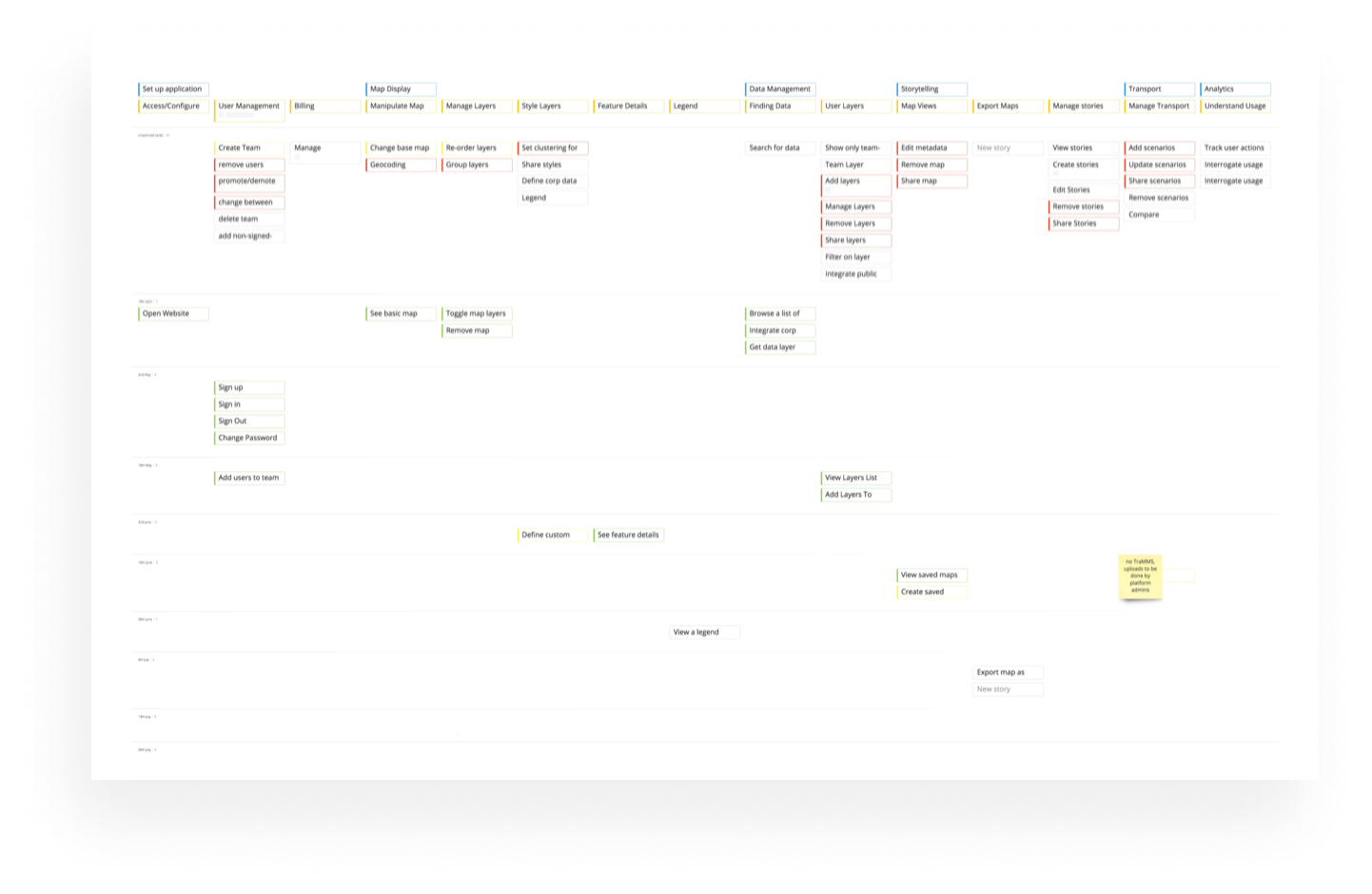
The product team ran an internal workshop to digest the outcomes of the user workshops and define the requirements.
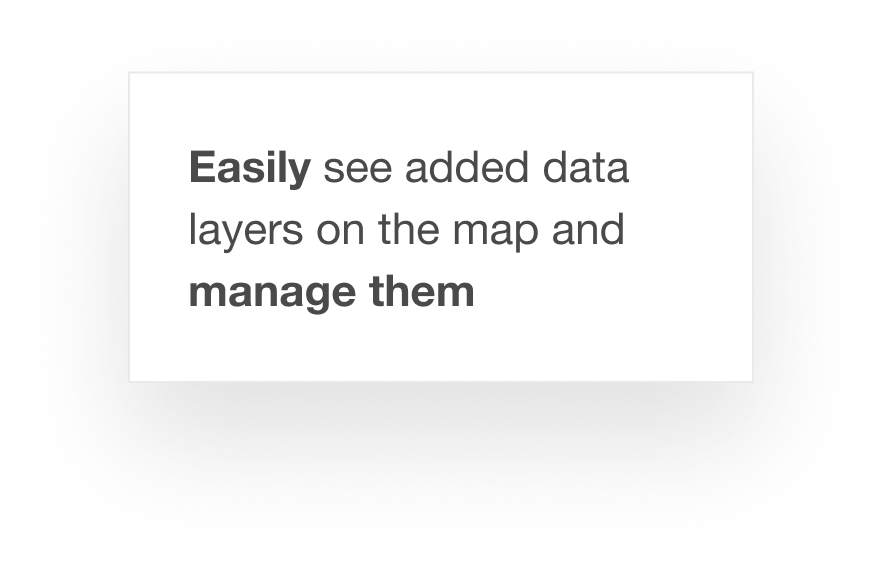
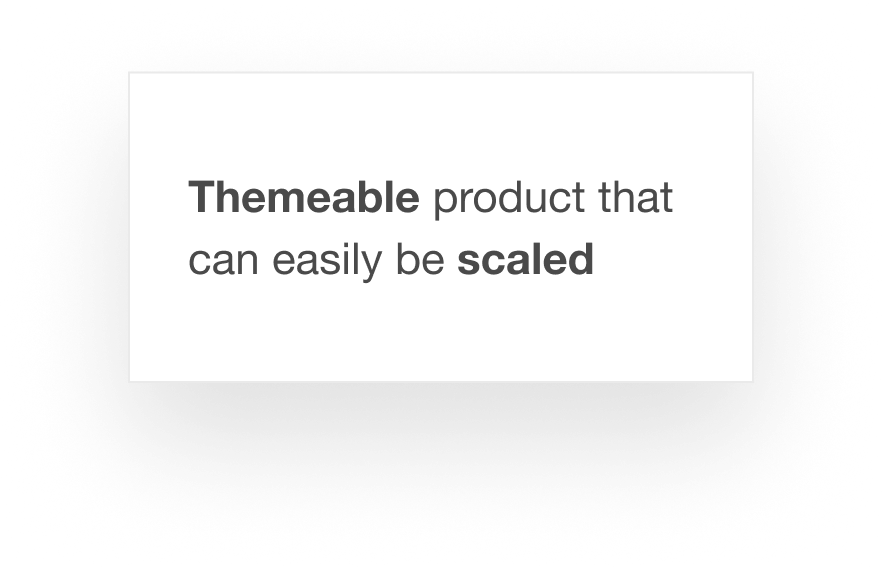
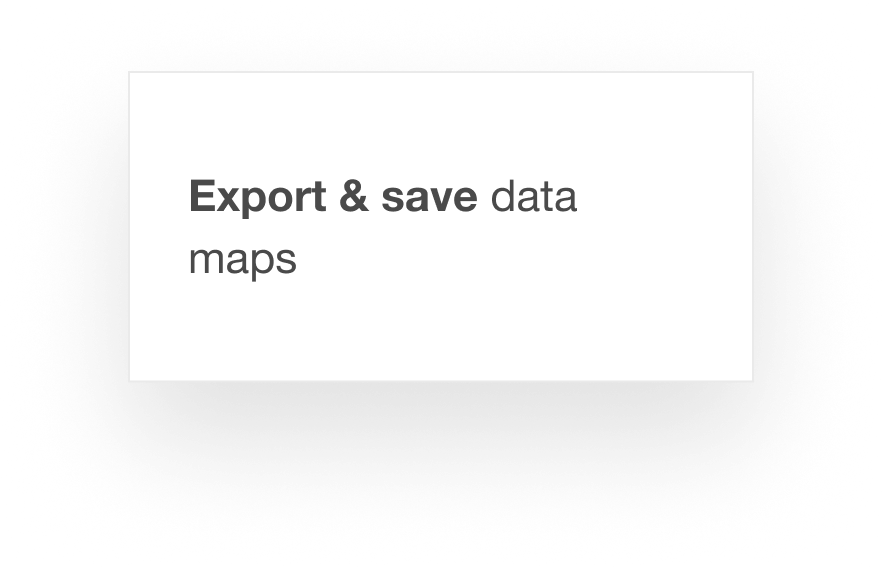
Features were voted based on priority and technical complexity, grouped into phases and a rough roadmap was created.
Requirements
We created user journeys for each story/requirement. This helped to break up the work into smaller pieces that could be delivered quicker.
User Journeys

MVP Requirements
The Outcome
Design
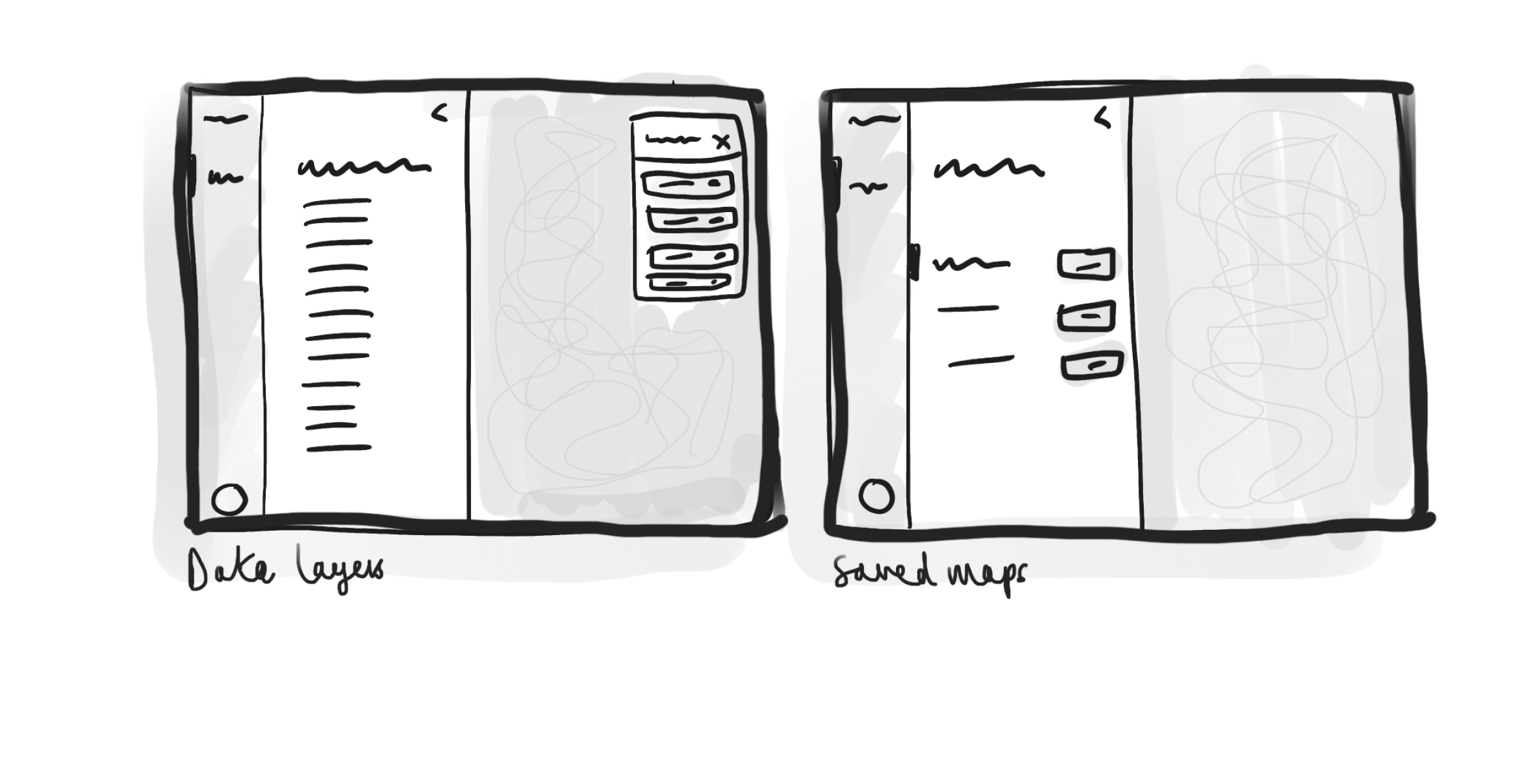
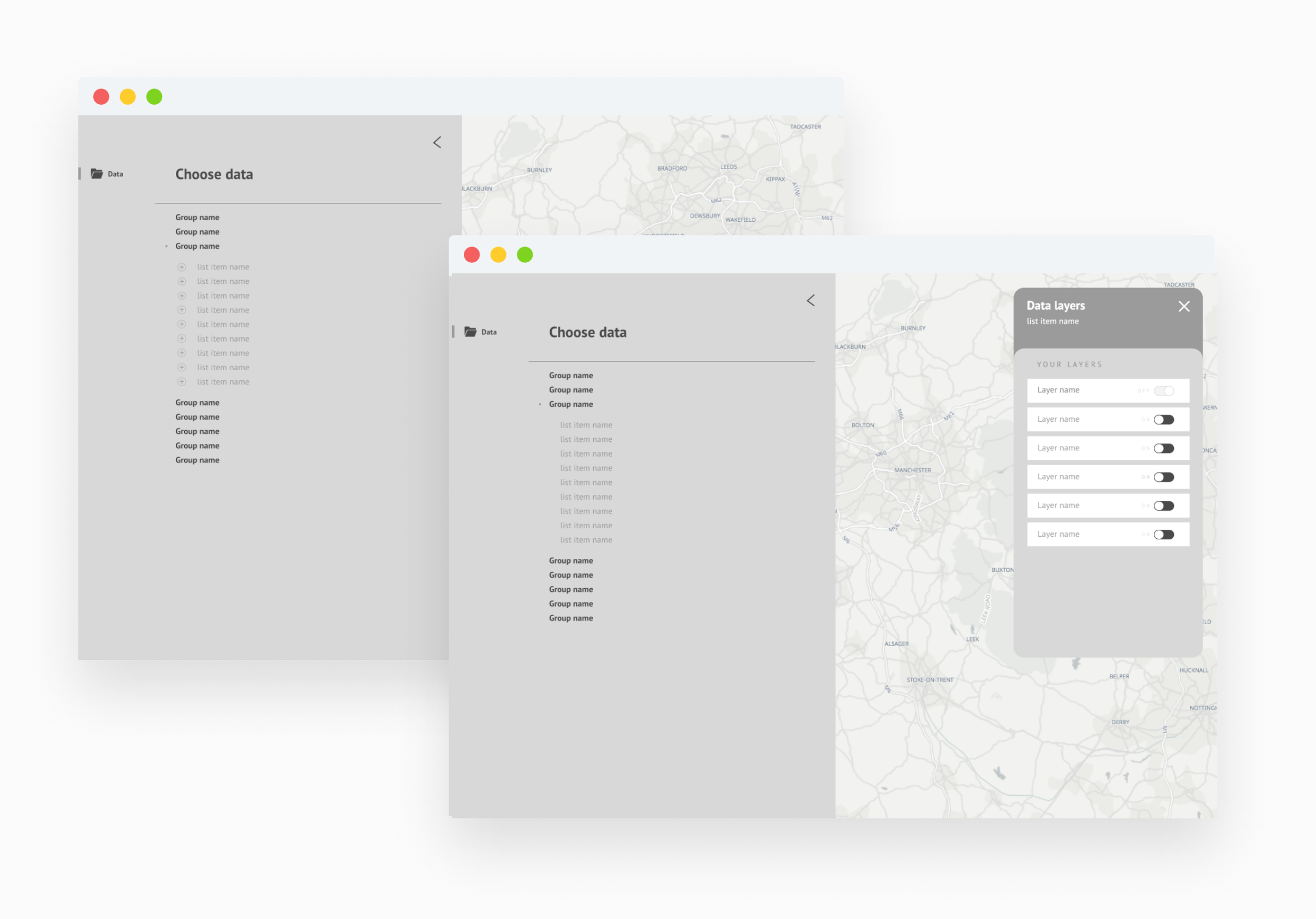
Wireframes showing the adding of data to a map layer. The menu/data is shown in an expanded panel that can be closed to view the map in fullscreen.
Initial Wireframes
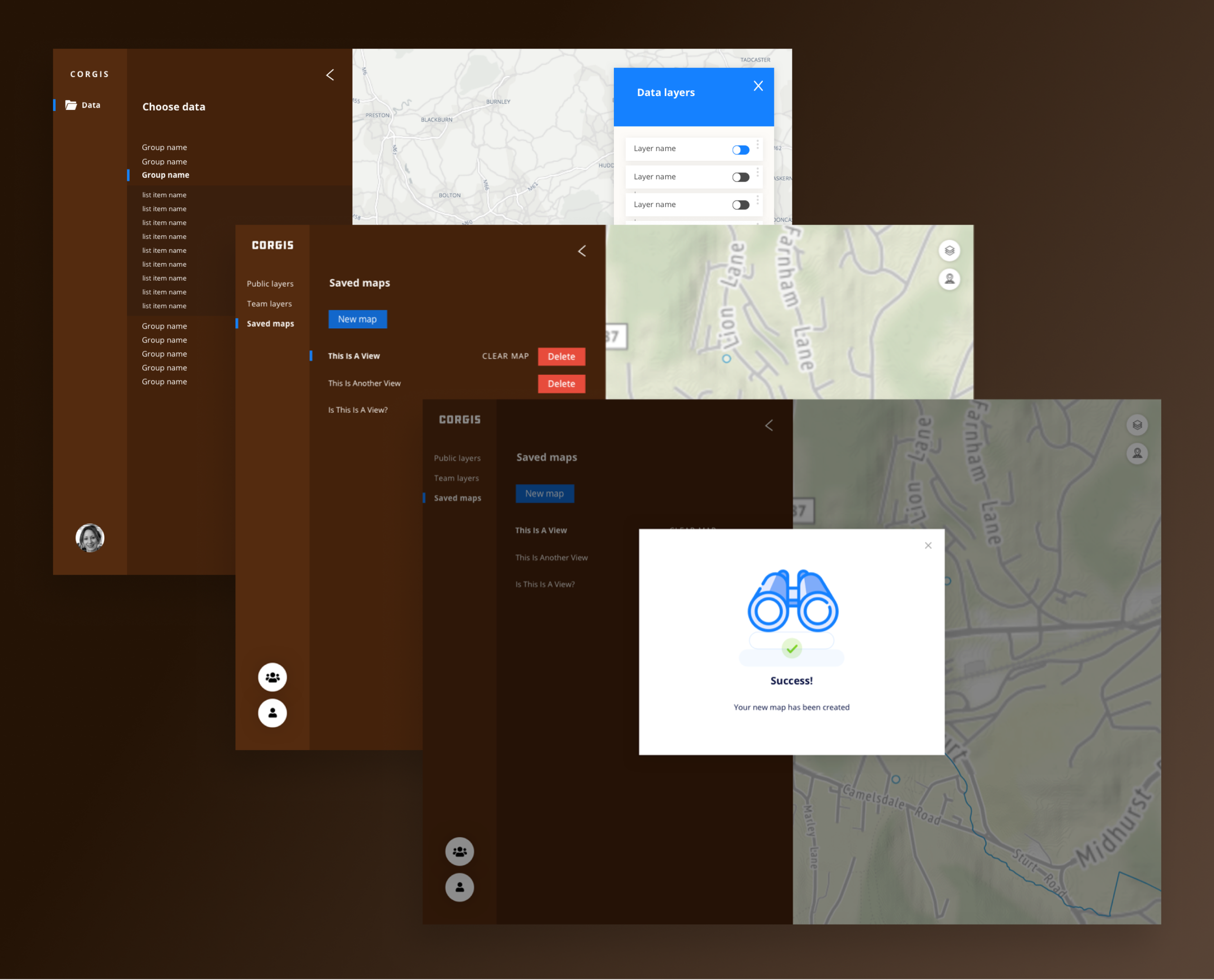
The colour palette plays off the environmental elements, in particular earth - brown, and water - blue.
The biggest challenge was designing with so much data, and the need to be able to see all of it at all times.
UI Designs
The Outcome
Testing
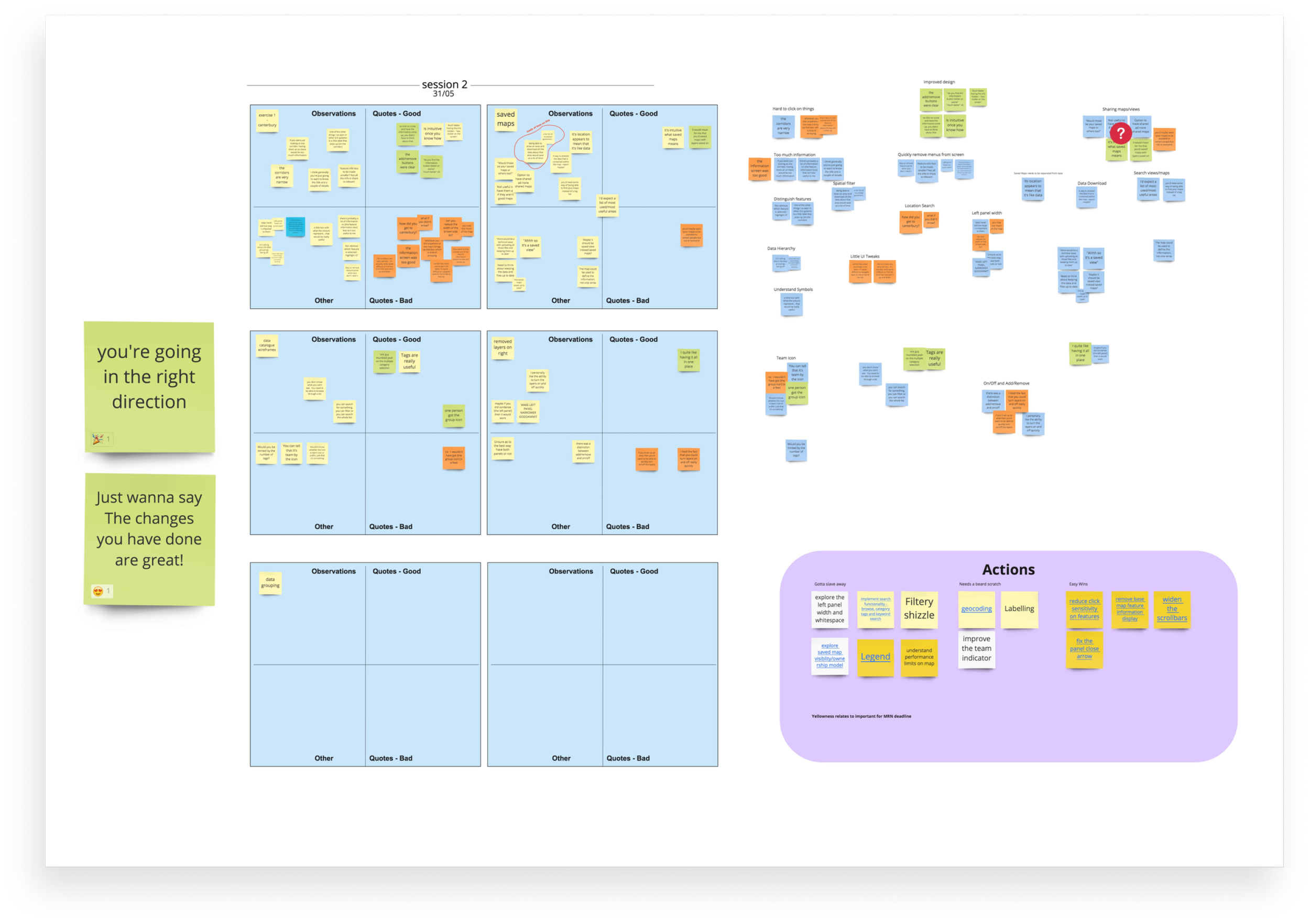
The biggest feedback from usability testing was around the visibility of data layers.
“The data is still hard to navigate, especially if you don’t know what you’re looking for”
Search and filter functionality
Info button to see what the layer is
Tagging groups of similar data
Solutions
This panel has been split up into search/filter and tagged groups, as well as being able to simply browse through endless data list if desired.
Iteration
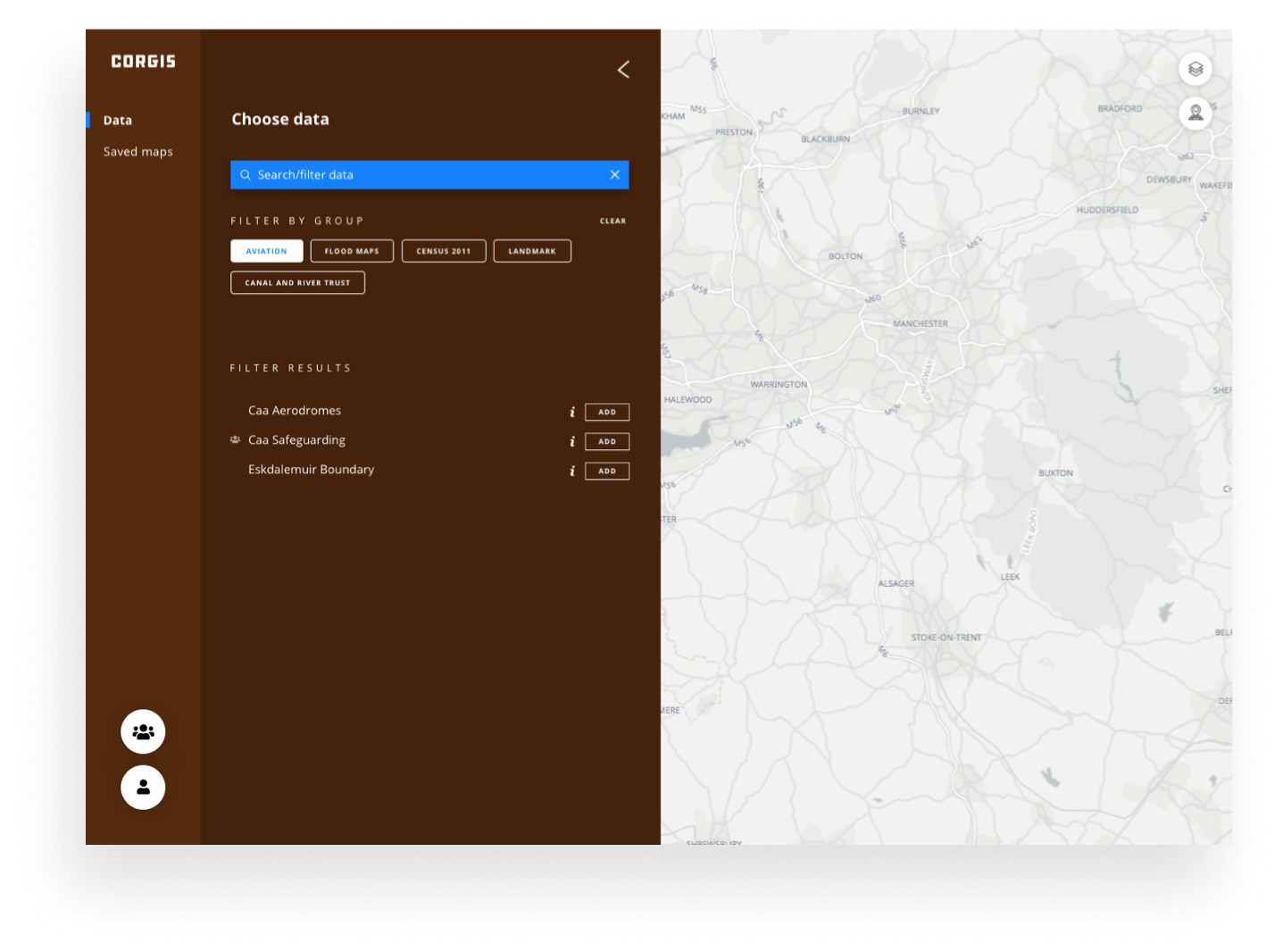
This round of testing was to validate changes as a response to the previous testing requirements.
Further Testing
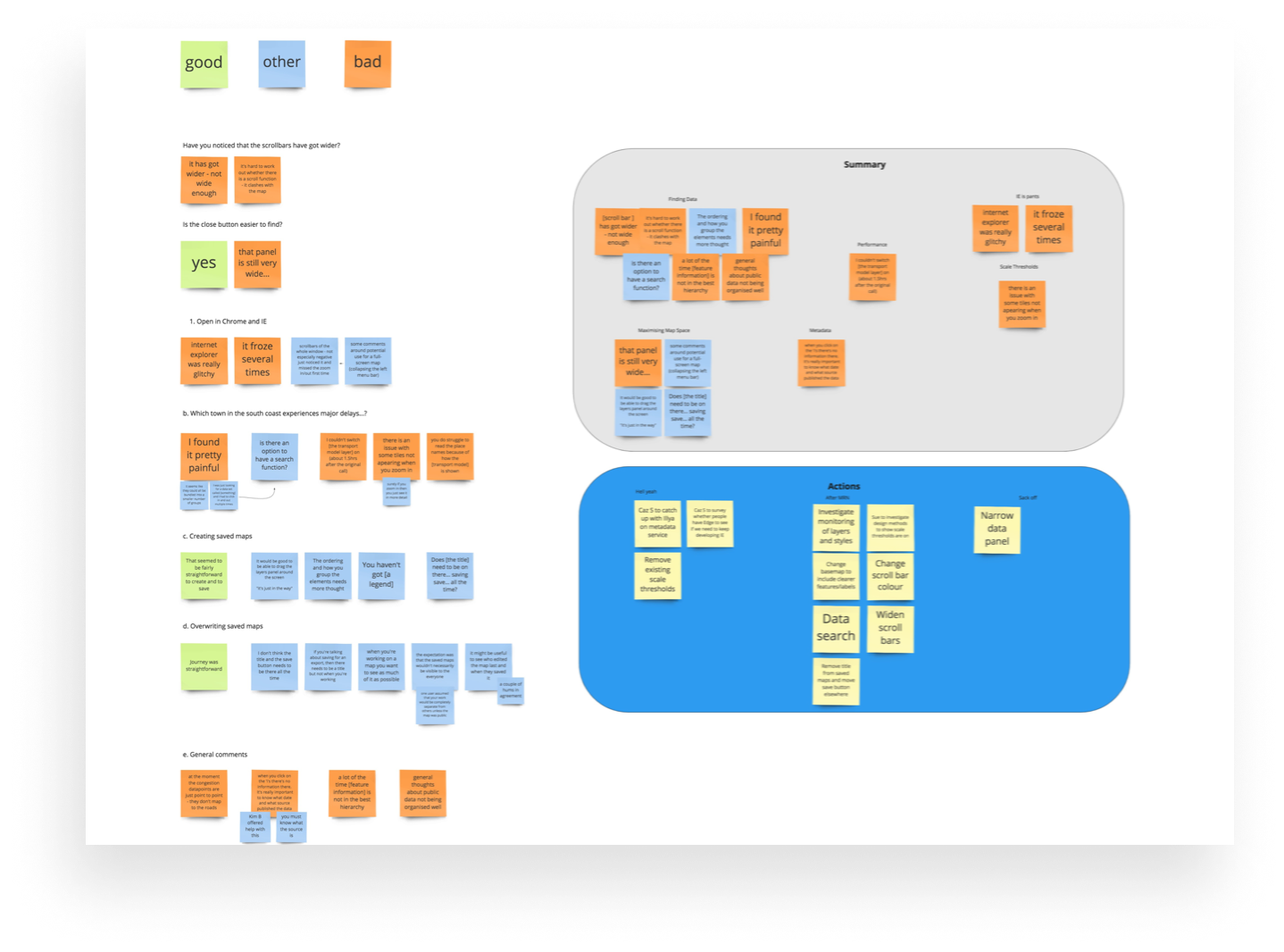
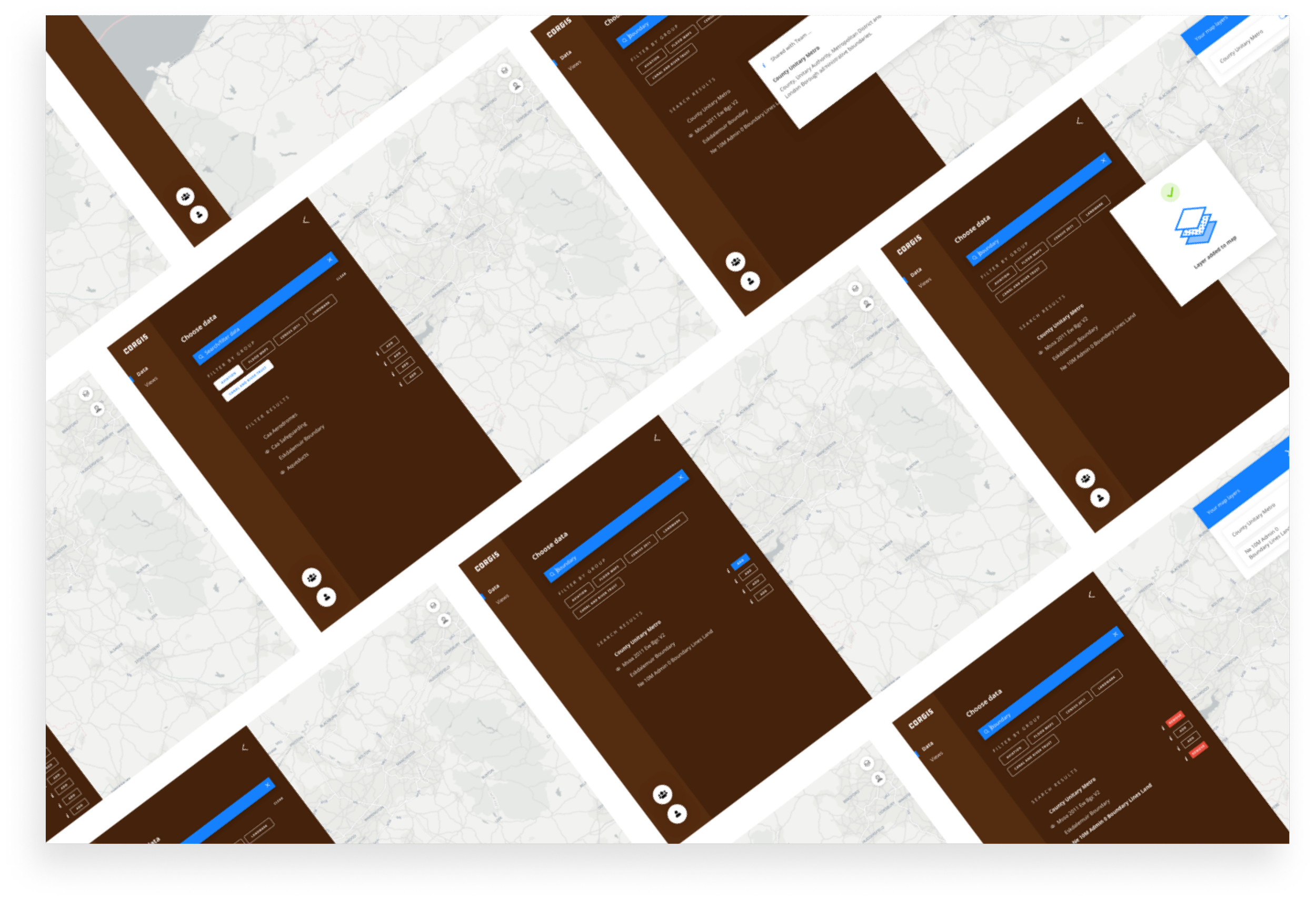
Final UI Designs
The Results
This tool has enabled local councils to make more informed decisions on infrastructure within cities and suburbs.
This means transport runs more smoothly, cycle lanes are more widely used when placed in appropriate areas, and reduce the amount of pollution in a city.
The efficiency of workers moving away from heavy spreadsheets and into a custom tool has improved immensely.
Learnings
It’s easy for stakeholders to see the end solution and become fixated on it and not the process and the journey (more of a waterfall way of thinking).
With a new product, the flexibility of agile methodology
is essential. Research will produce new findings, requirements and priorities, and a young product needs that responsiveness to be able to thrive.
The Power of Agille
With a new product, the possibilities for features are endless, and the input received from stakeholders, users and team members can mean that the scope can get pretty unmanageable.
Regular sprint planning, reviews & retros helped to keep expectations in check, as well as provide visibility for up and coming features.
Managing Product Expectations